FARO House
Los Reartes, Córdoba, Argentina — 2024


Architecture
Club del Lago, Punta Ballena Departamento de Maldonado, Uruguay — 2019
An architecture conceived to disappear among the trees, withstand time and recover the autonomy of contemporary dwelling.
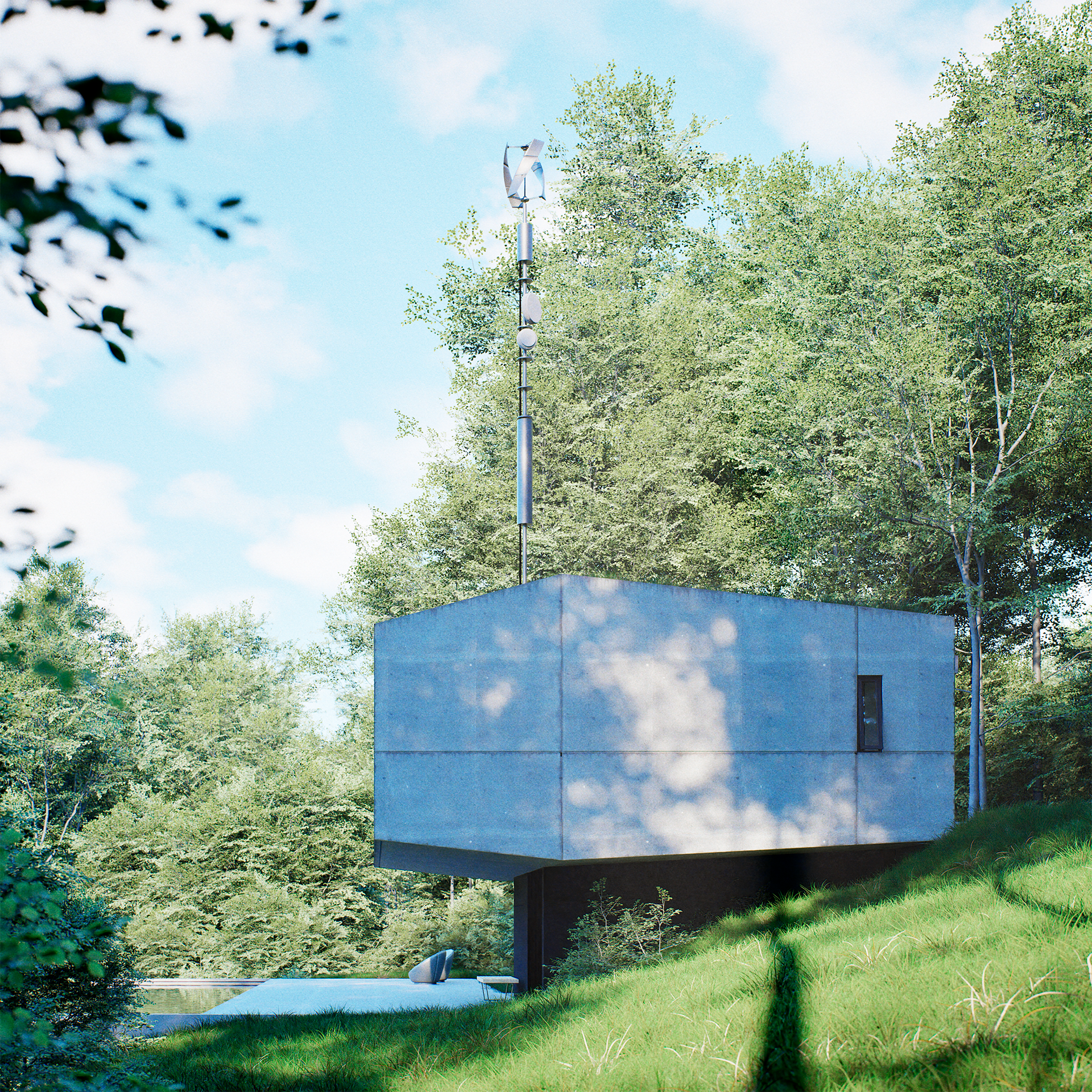
On a wooded lot in Punta Ballena, Uruguay, this house proposes a way of dwelling deeply connected to the natural landscape and radically independent of conventional urban logics.
The house does not seek to dominate the surroundings or become a visible object on the territory. On the contrary, it uses the forest as an essential part of its functioning: protection, thermal regulation, visual privacy, and passive security.
Conceived as an autonomous dwelling for temporary and seasonal use, the project responds to an increasingly relevant contemporary need: building shelters capable of remaining without constant maintenance, operating independently from external networks, and resisting the passage of time without deteriorating.
The architecture thus emerges as a synthesis of material robustness, low maintenance, self-sufficiency, and precise integration with the natural ecosystem.
Located next to the Club del Lago golf course and just meters from the Punta Ballena lagoon, the house is embedded in a dense forest setting where vegetation functions as a multifunctional natural infrastructure.
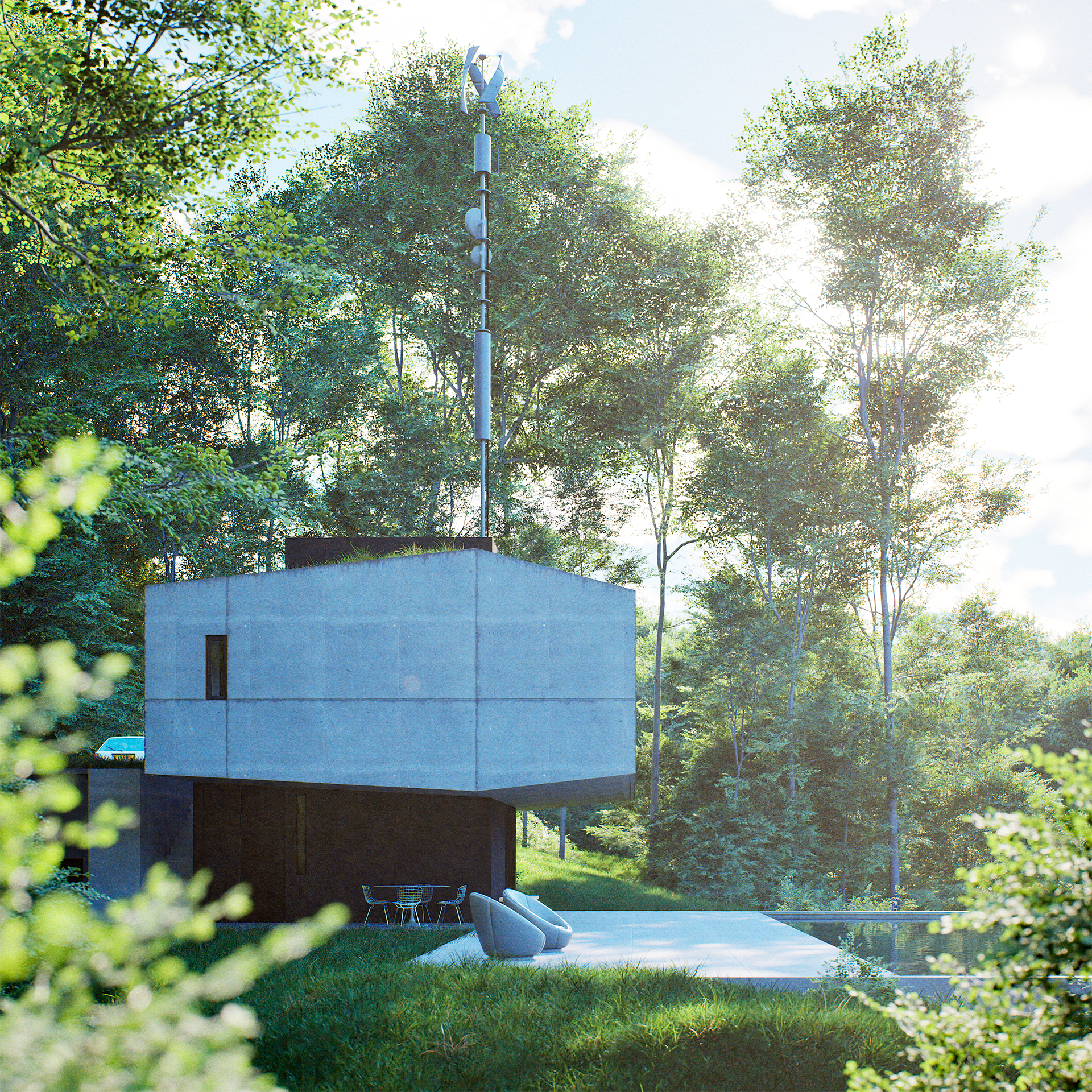
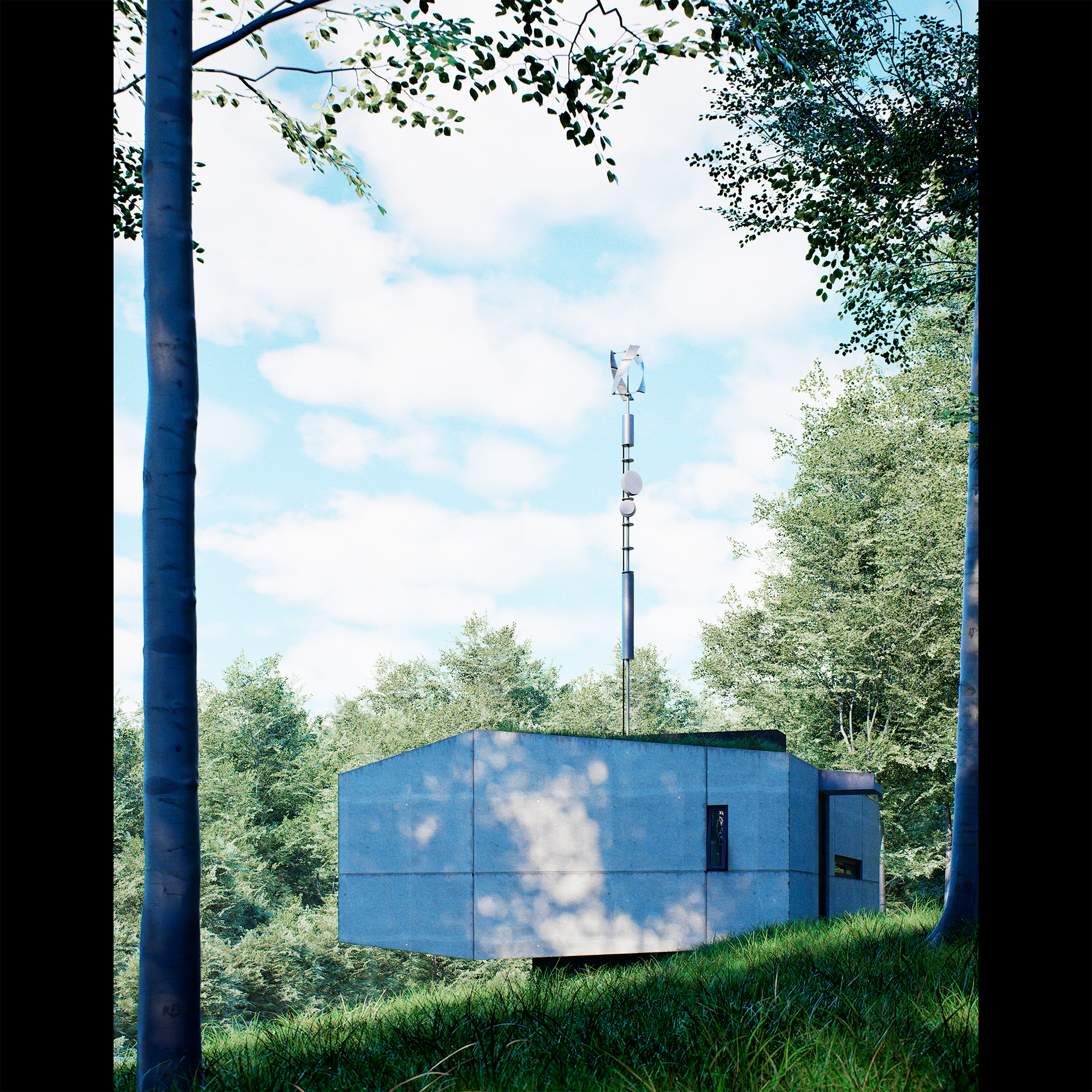
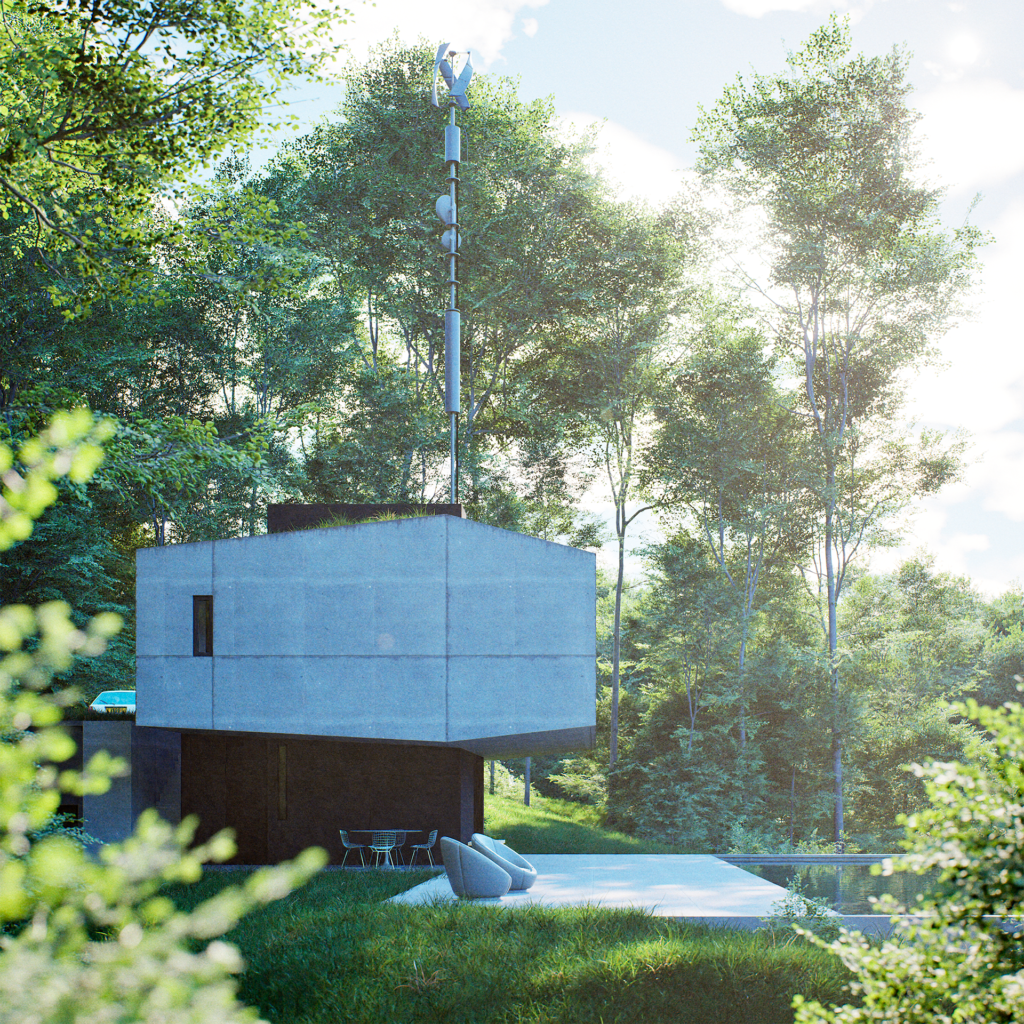
The trees protect the house from coastal winds, filter views, control sunlight exposure, and create a condition of extreme privacy. The dwelling practically disappears into the forest when uninhabited.
This relationship does not respond solely to an aesthetic intention. The forest actively participates in the operational logic of the house. It provides shelter, organic matter, water regulation, and a passive climate control system that no technology could replace with the same efficiency.
The house needs no bars, cameras, or invasive surveillance devices. The territory itself acts as protection.
The spatial organization of the project is based on a very precise duality between protection and openness.
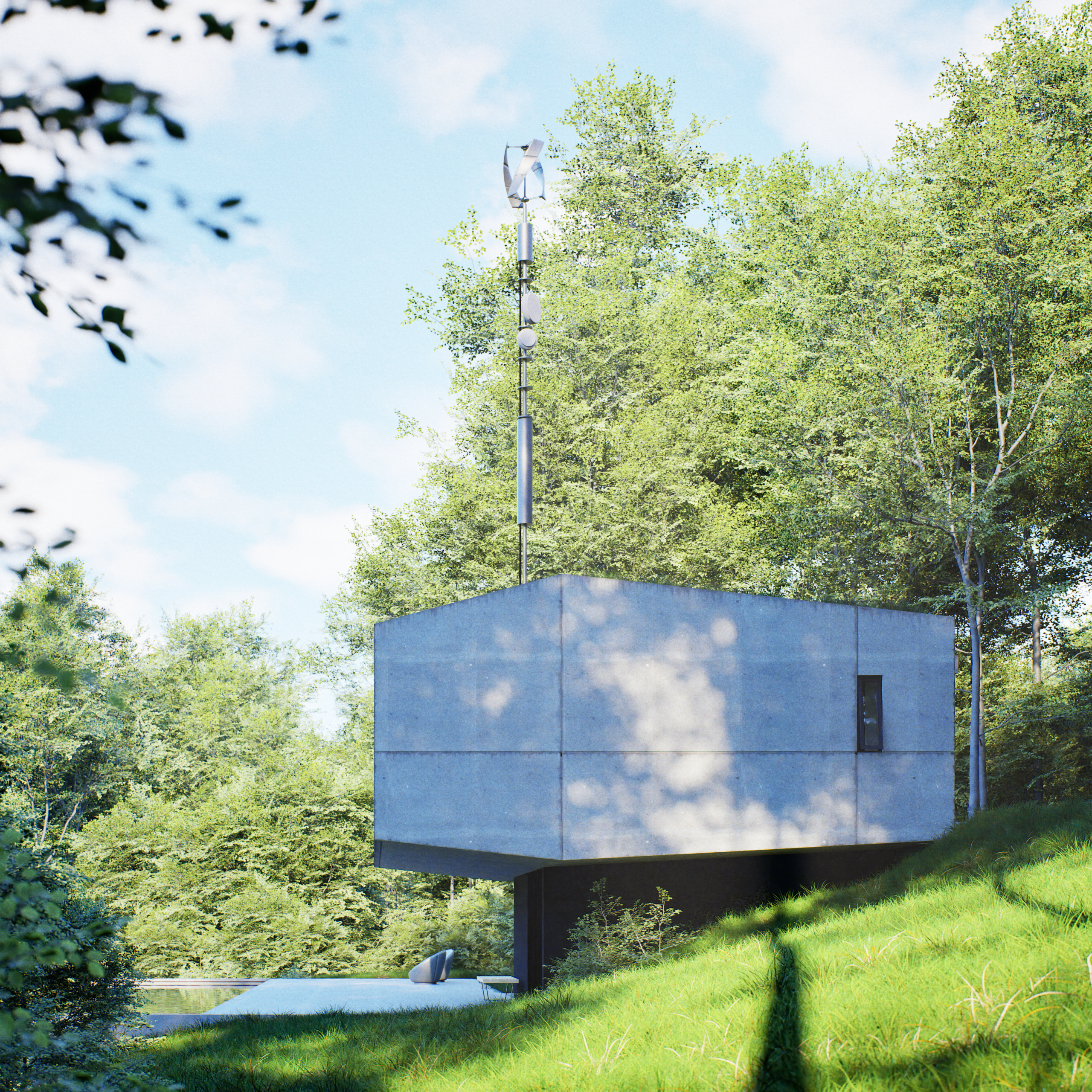
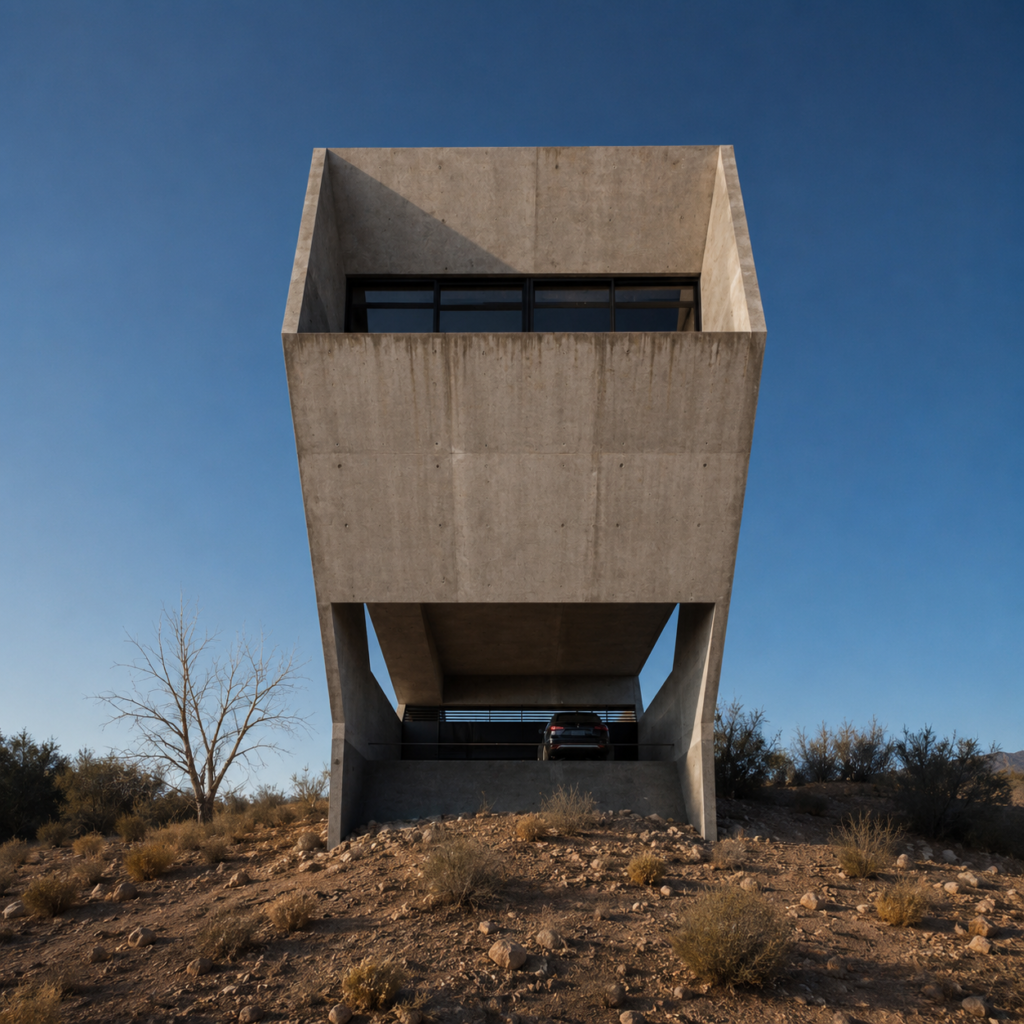
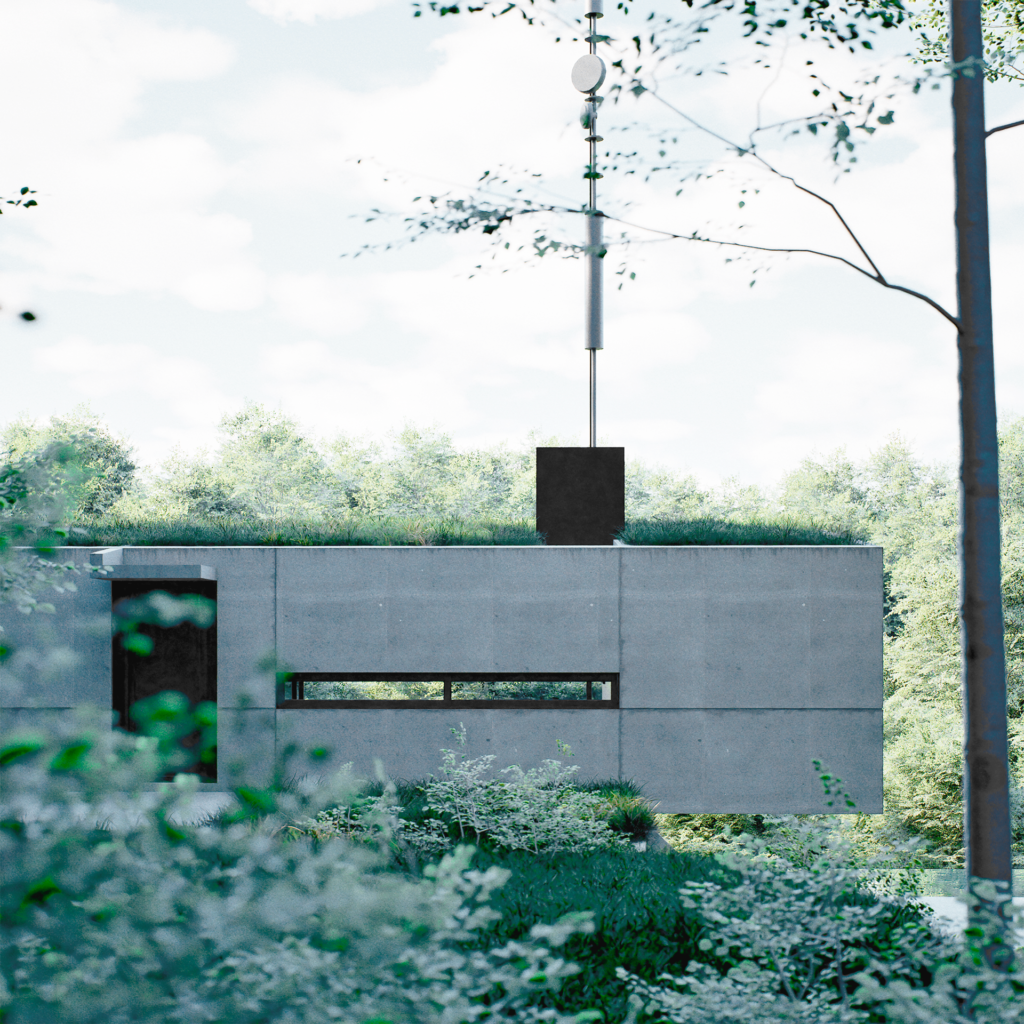
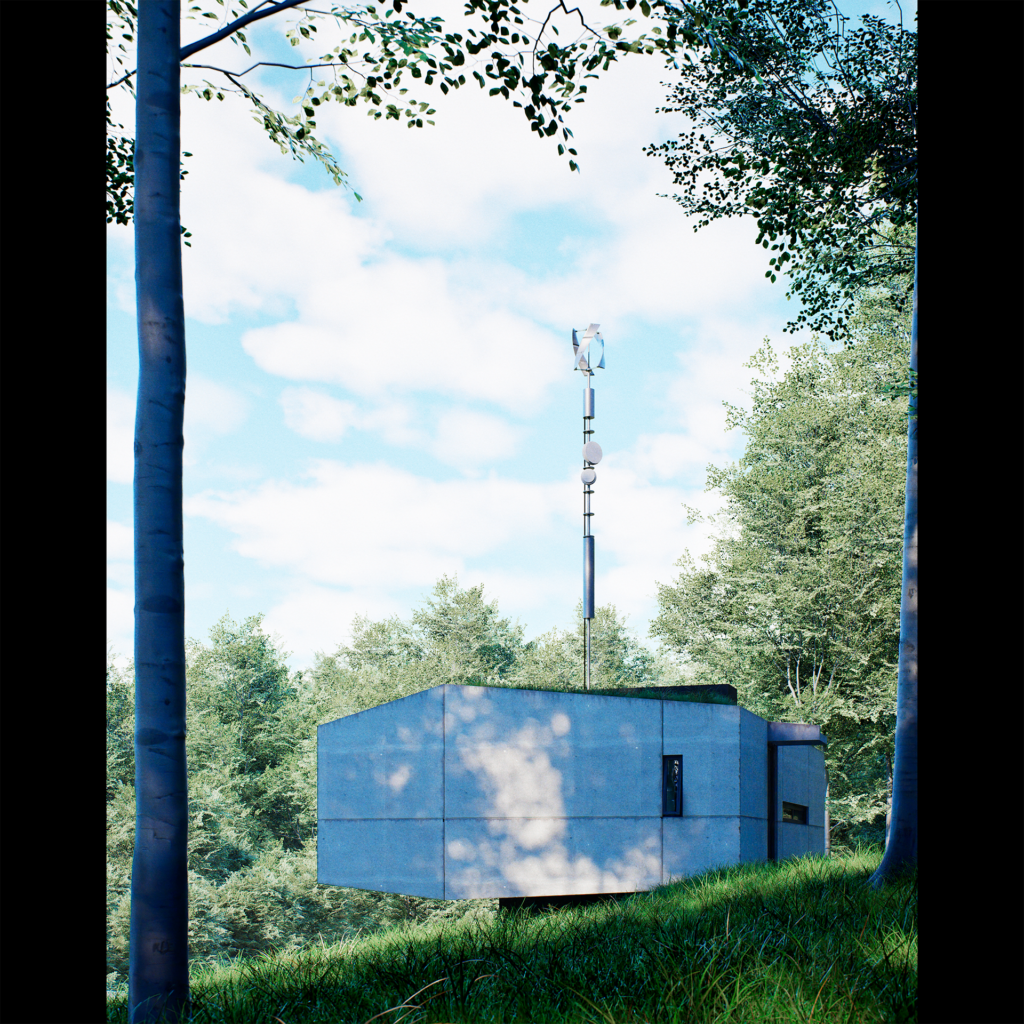
At its access level, the house presents itself as a hermetic, contained volume. From arrival, the architecture conveys a sense of quiet strength: few openings, dense materiality, and a geometry that does not invite but contains.
The house protects its intimacy from the natural terrain, deliberately hiding behind the forest and the slope.
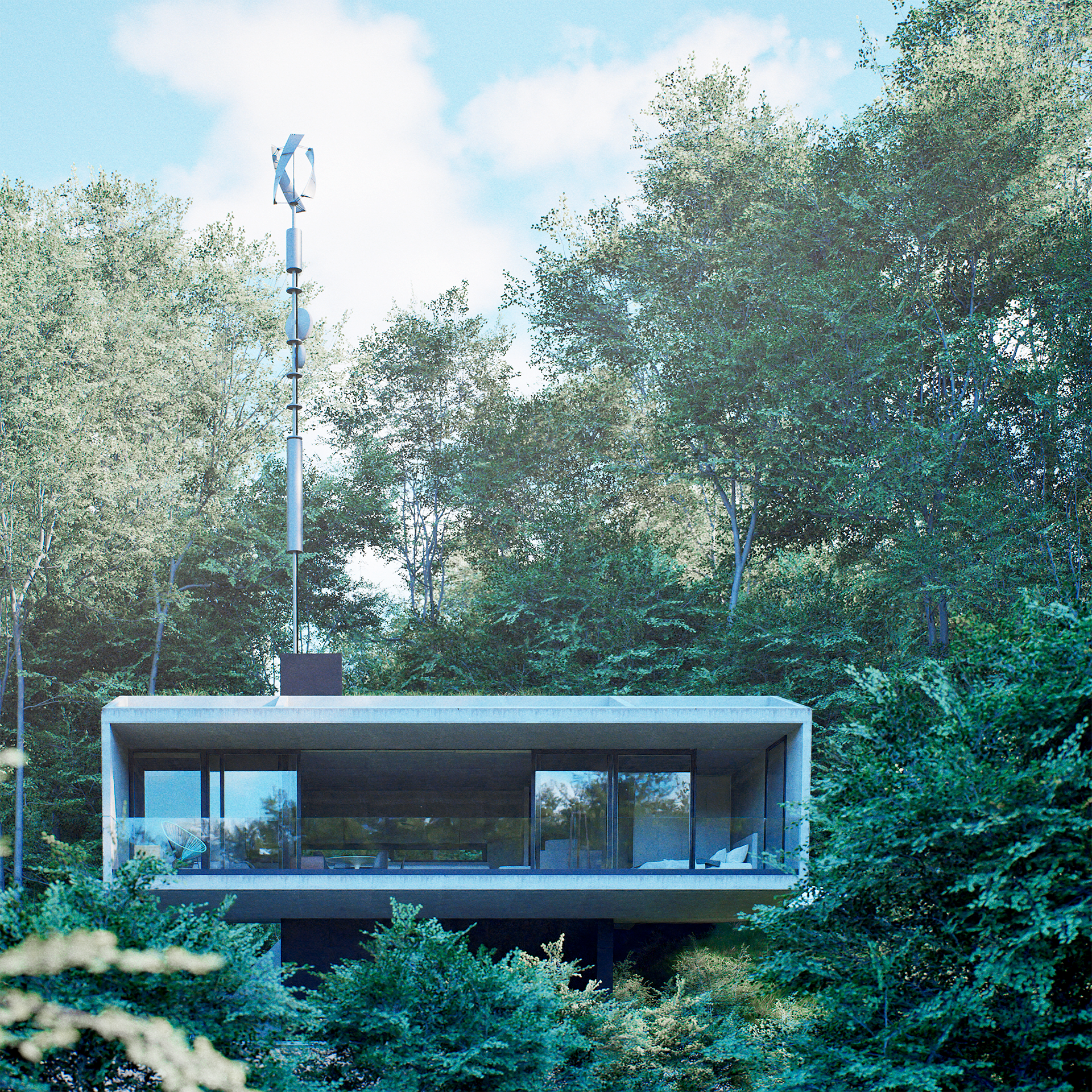
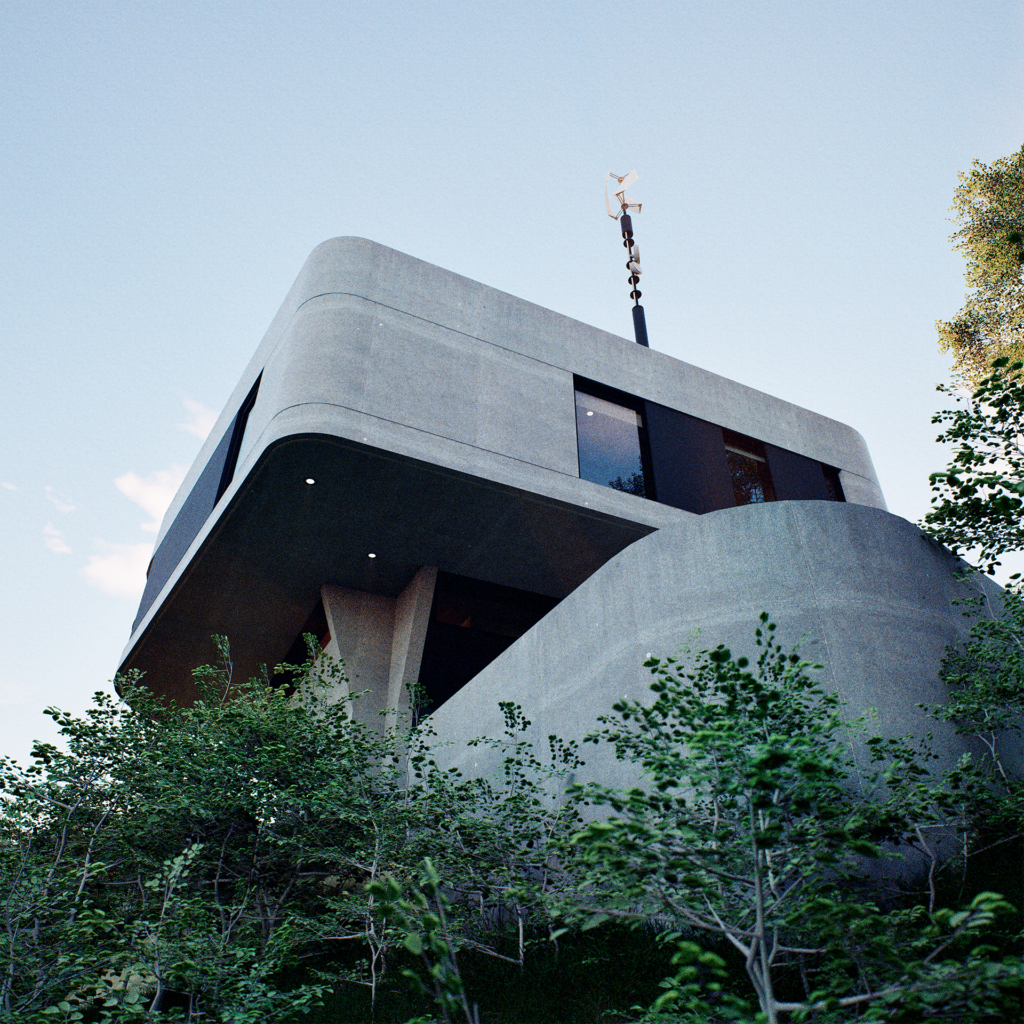
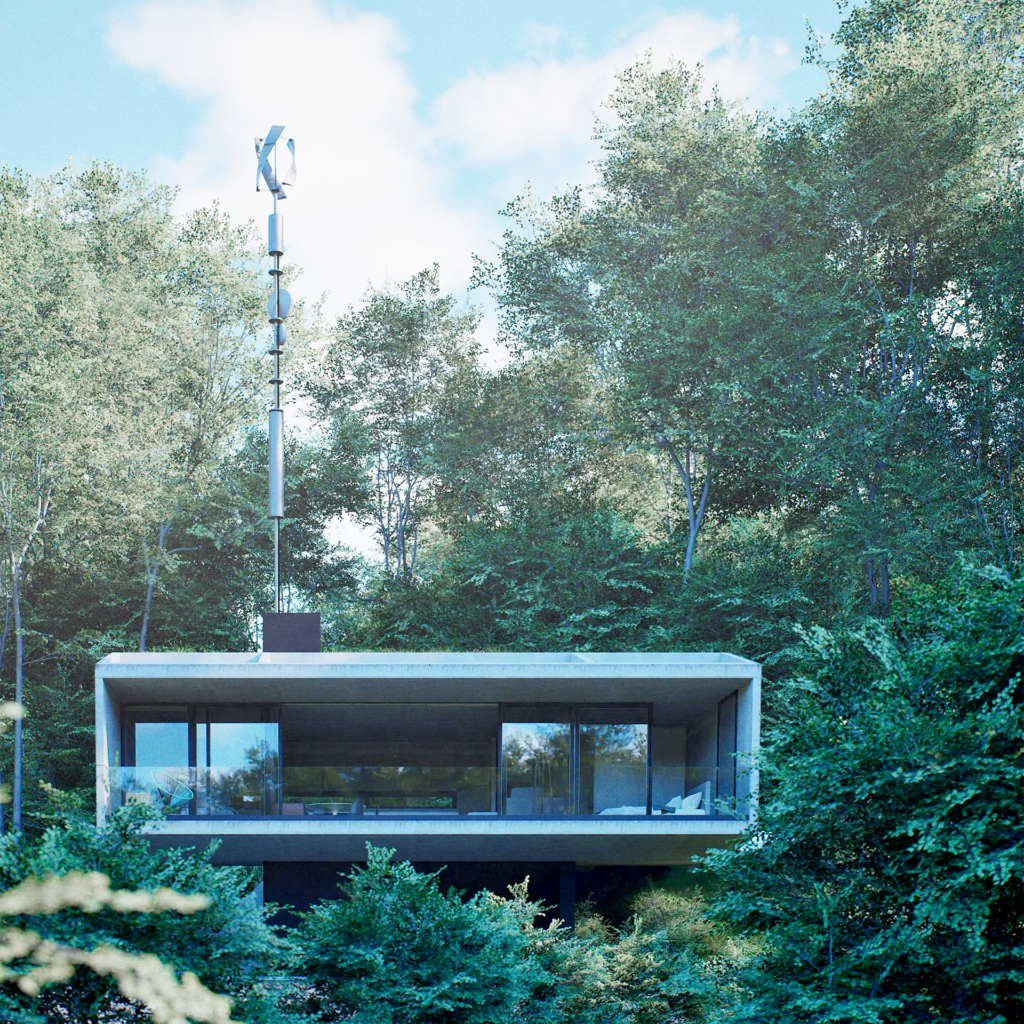
However, that condition changes completely toward the open front of the site. Rising above the topography, the house reveals broad views of the landscape and opens completely to the exterior through large window frames, continuous terraces, and an unbroken relationship between interior and landscape.
The architecture thus works with a logic of compression and expansion: closed and protected at contact with access; open, transparent, and contemplative when it reaches the landscape.
Casa Autónoma was conceived as a dwelling for non-permanent use. An architecture capable of remaining empty for weeks or months without deteriorating, without depending on external maintenance, and without losing its inhabitable condition.
This condition defines much of its design and material decisions.
Exposed reinforced concrete minimizes exterior maintenance requirements and guarantees resistance against humidity, salinity, wind, and the passage of time. The compact geometry minimizes exposed surfaces and optimizes the relationship between volume and envelope.
When the house is unoccupied, it remains silent and impenetrable within the forest. When its inhabitants return, everything remains exactly as it was left.
The house requires no permanent surveillance because its security strategy is based not on displaying control, but on disappearing.
The project incorporates principles developed in the Autónoma manifesto, understanding the dwelling as a resilient system capable of reducing its dependence on conventional infrastructure networks.
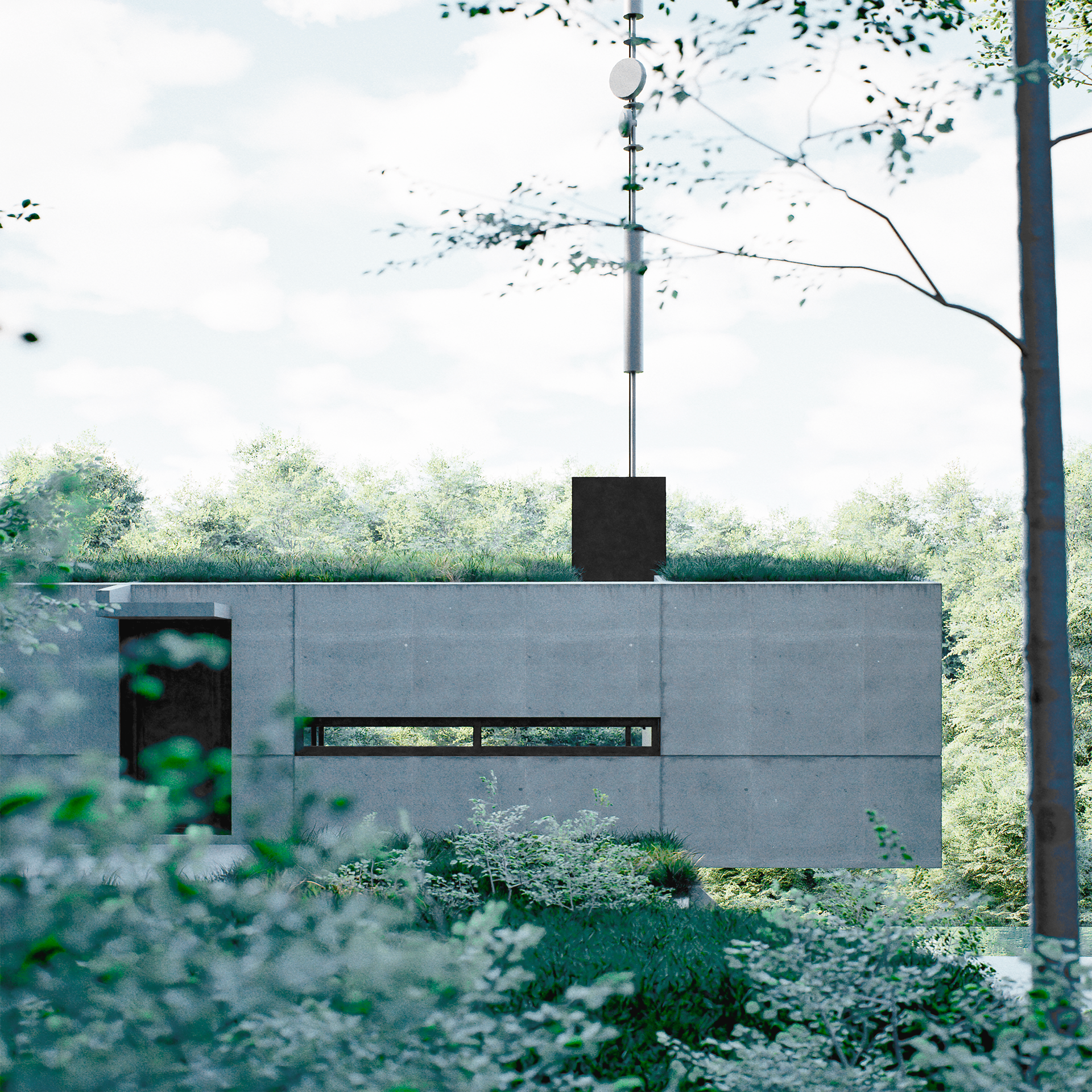
The orientation of the volume, cross-ventilation, protected expansions, and the green roof allow the thermal performance of the house to be optimized and its dependence on active climate control systems to be reduced.
The green roof not only improves thermal insulation and rainwater absorption. It also helps to visually integrate the house into the landscape, restoring part of the vegetation cover over the building footprint.
Autonomy here is not conceived as technological isolation or as a fantasy of absolute disconnection. It is conceived as a concrete capacity to sustain comfort, security, and everyday life under variable or adverse external conditions.
In a global context of growing energy fragility, urban saturation, and environmental uncertainty, the house proposes an architecture prepared to endure.
The house is organized through a compact and efficient floor plan, where the large social space occupies the center of the composition.
Living room, dining room, and kitchen form a single continuous space open to the landscape through an extensive glazed facade and a covered terrace that functions simultaneously as an extension and a thermal filter.
On either side of the central core are the bedrooms, each with its own bathroom, allowing functional autonomy and privacy for different inhabitants or guests.
The continuous covered terrace acts as a natural extension of the interior, providing protection from sun and rain while amplifying the relationship with the surroundings.
The entire spatial organization of the house seeks to reduce the accessory and concentrate on the essential: light, shelter, landscape, and silence.
The materiality of the project was reduced to a few fundamental elements: concrete, glass, steel, and vegetation.
The architecture avoids unnecessary cladding or superfluous decorative gestures. Its identity emerges from proportion, mass, shadow, and the relationship between geometry and landscape.
The concrete absorbs the variations of forest light and registers the passage of time naturally. The vegetation advances, changes, and progressively envelops the architecture, integrating it into the ecosystem in which it sits.
Far from seeking a spectacular or ephemeral image, the house was conceived to last. To endure.
Casa Autónoma proposes a reflection on the future of contemporary dwelling.
In a world increasingly dependent on networks, stimuli, surveillance, and constant consumption, the house rehearses another possibility: a quiet, resilient, essential architecture capable of returning dwelling to its most concrete and authentic dimension.
Autonomy here does not mean isolation from the world. It means recovering the capacity to decide how we live, dwell, and relate to the landscape.
An architecture that understands that sometimes the greatest form of protection is not to show more, but to disappear into the forest.
This house is part of the Autónoma project, a conceptual manifesto of architecture and the future developed by the studio LY Arquitectos.
 01 / 06