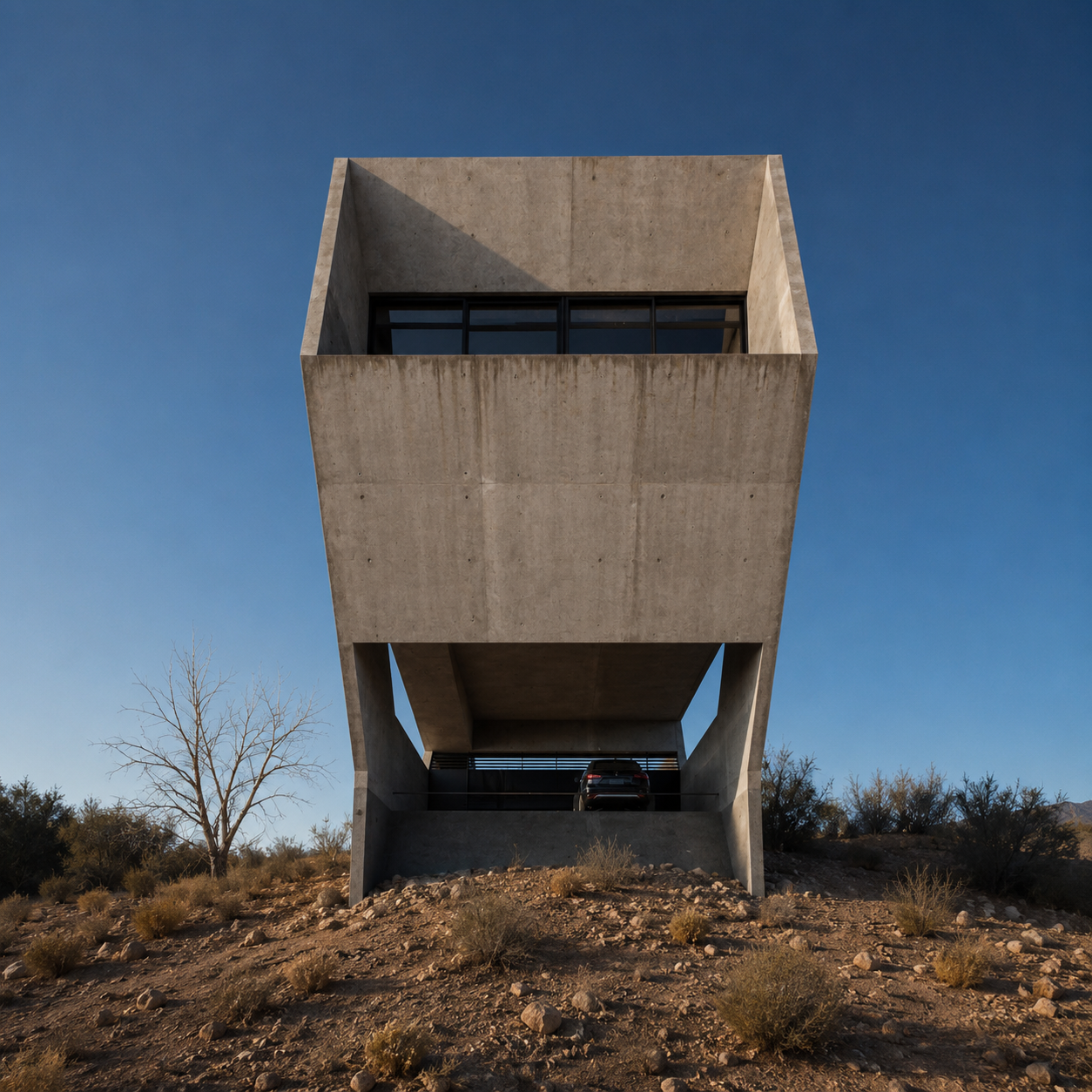
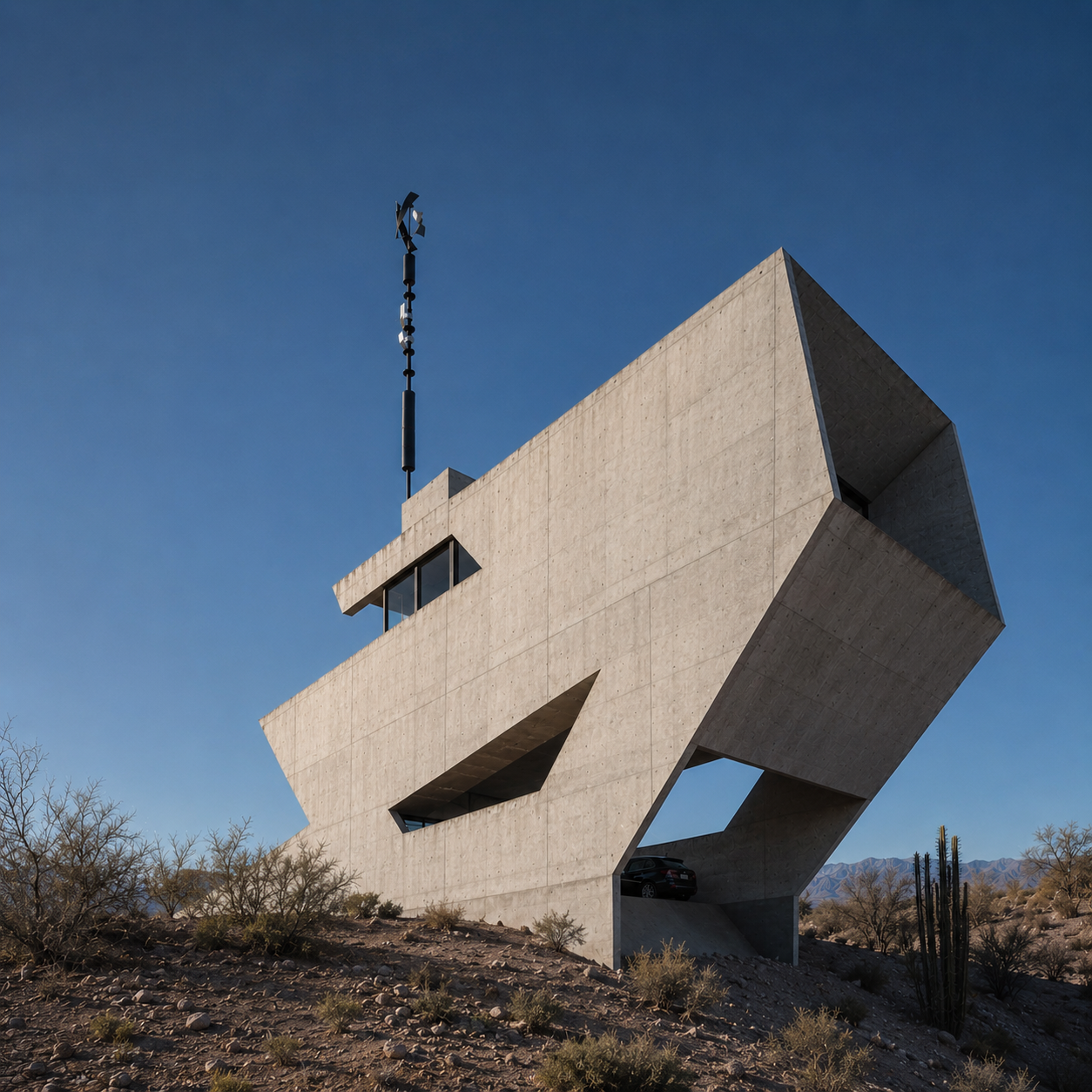
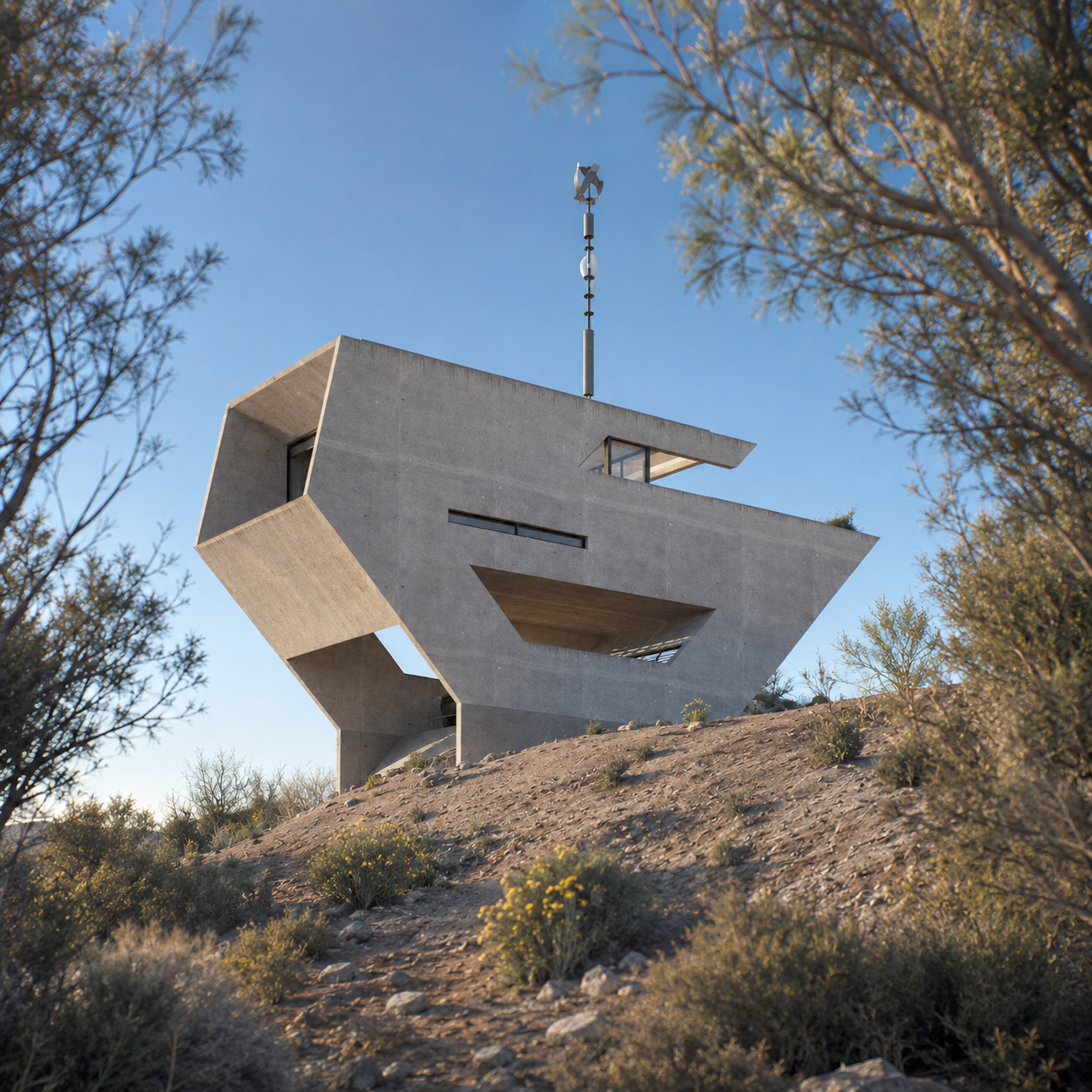
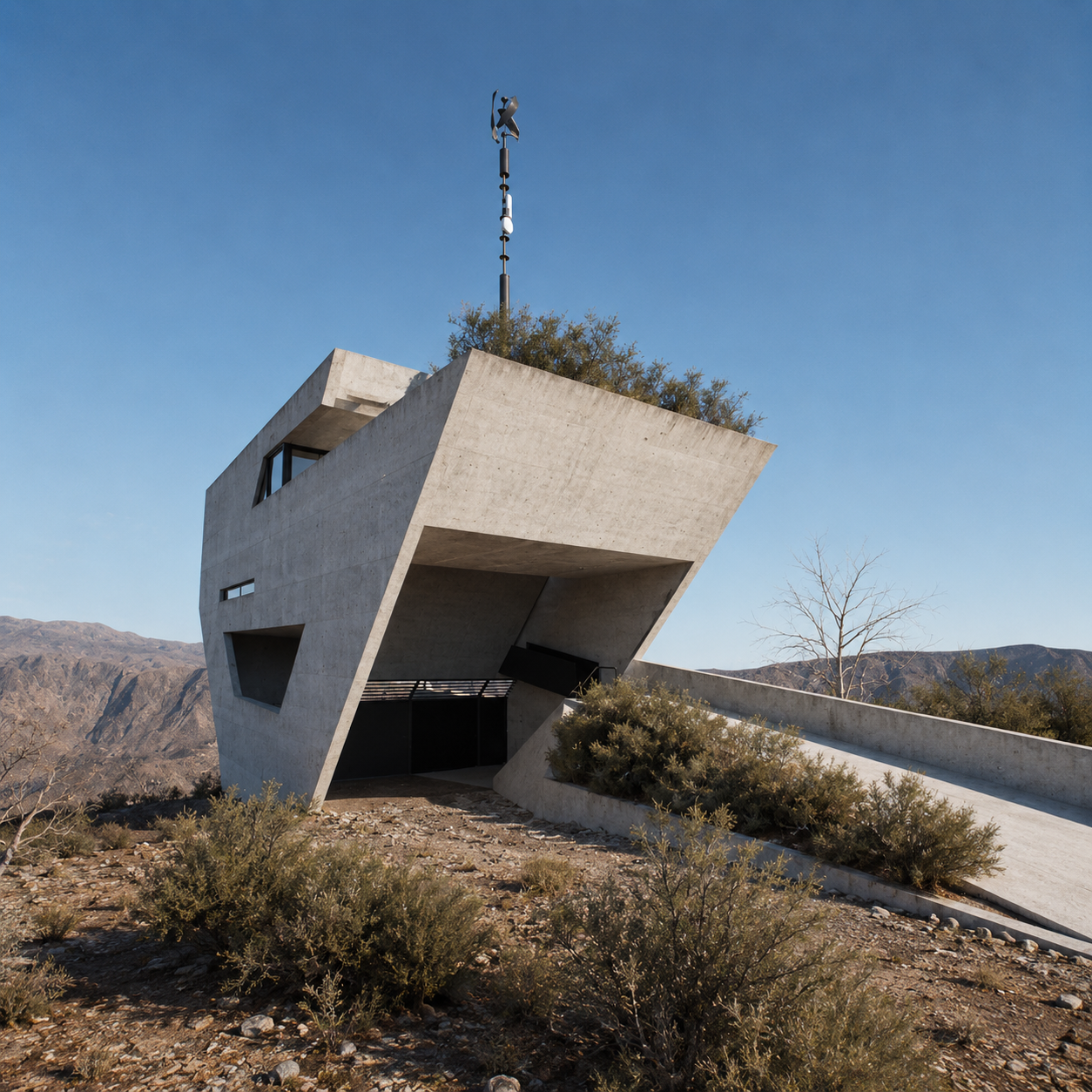
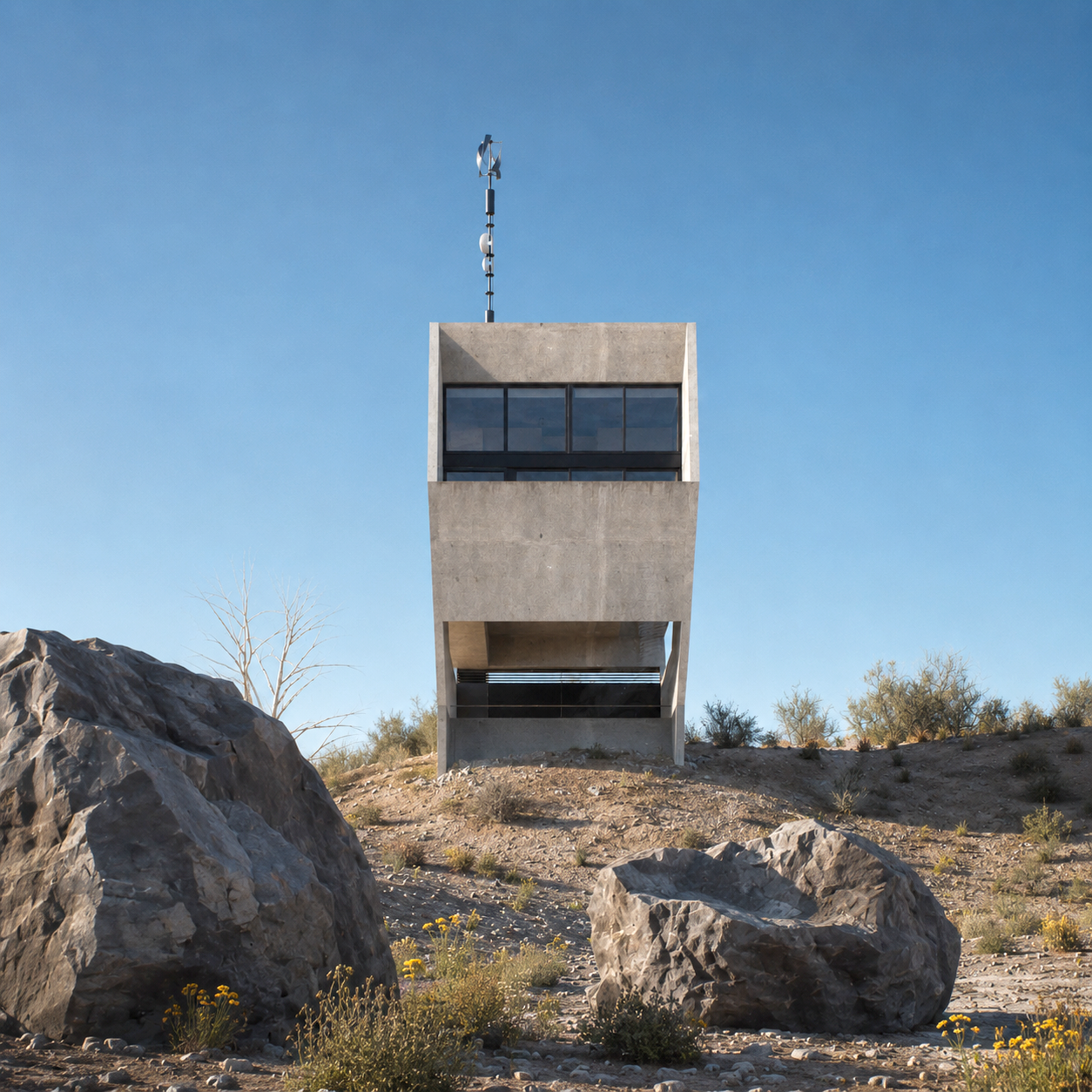
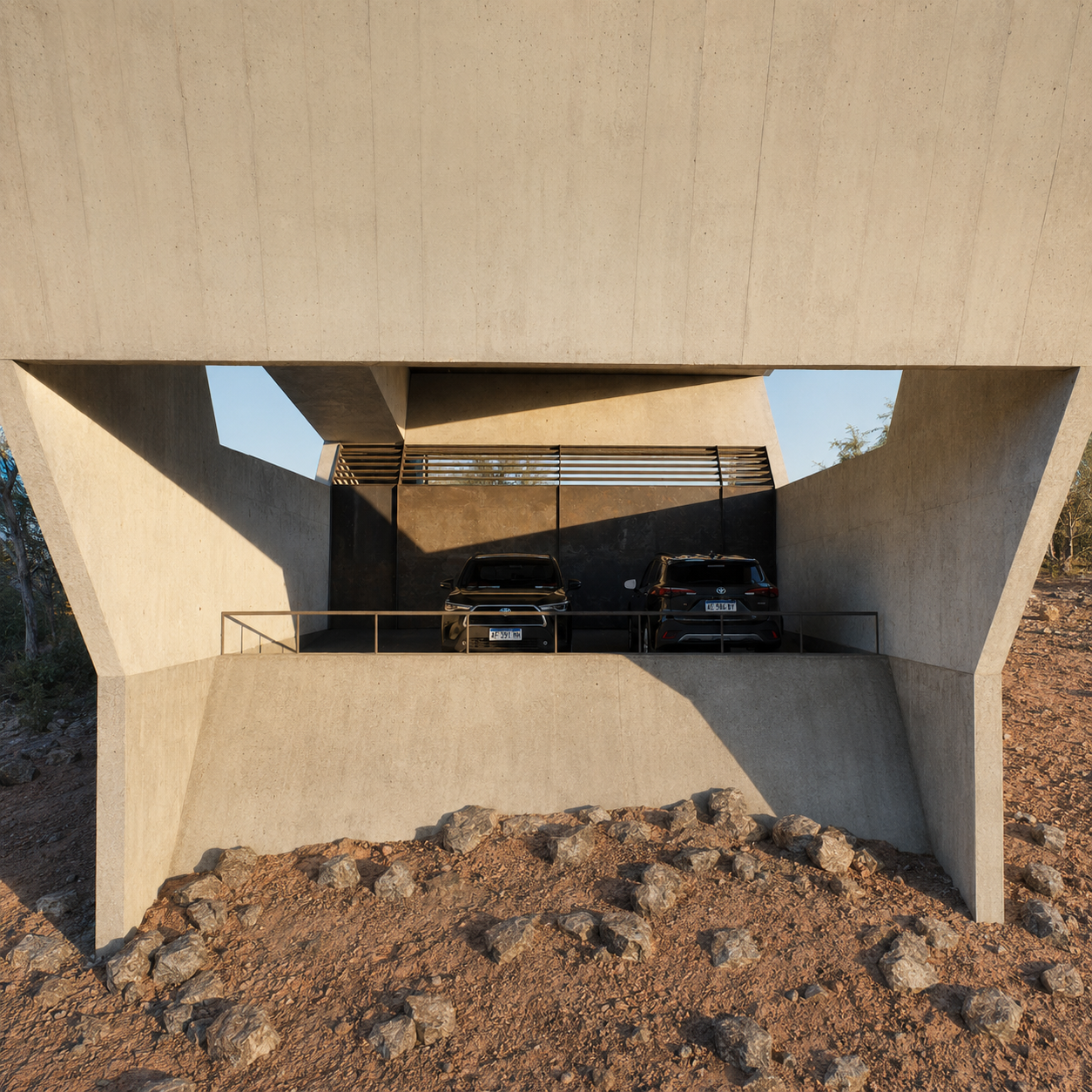
In the midst of the mineral landscape of San Juan, far from the city, from infrastructure and from any conventional logic of dwelling, this house rests on the territory as an autonomous artifact. It does not seek to domesticate the desert nor to blend mimetically into it. It seeks to resist it, understand it and operate within its extreme conditions.
TypologyAutónoma, Sustentable, Vivienda
LocationTalacasto, San Juan, Argentina
ClientAutónoma
Year2025
Area230 m²
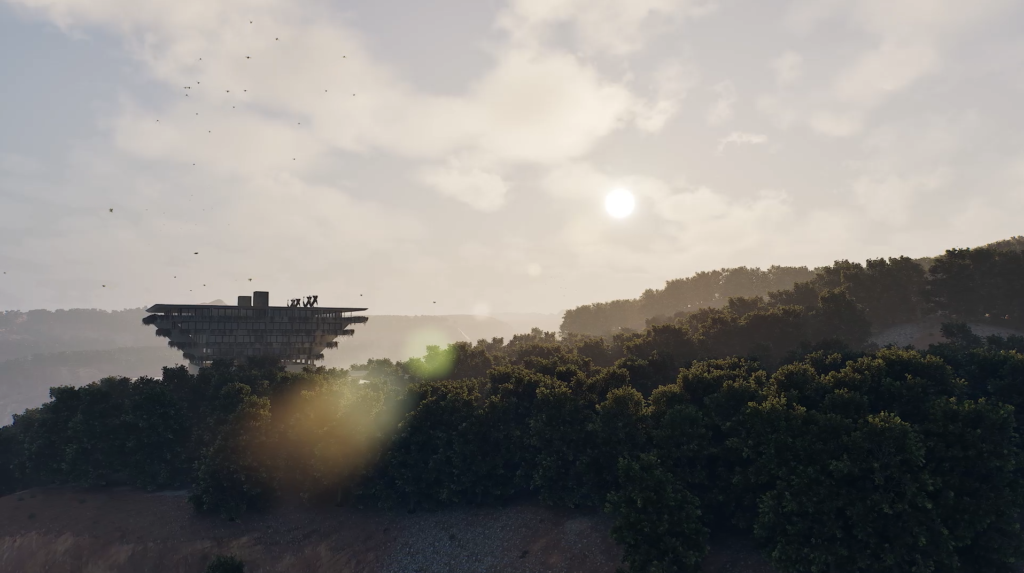
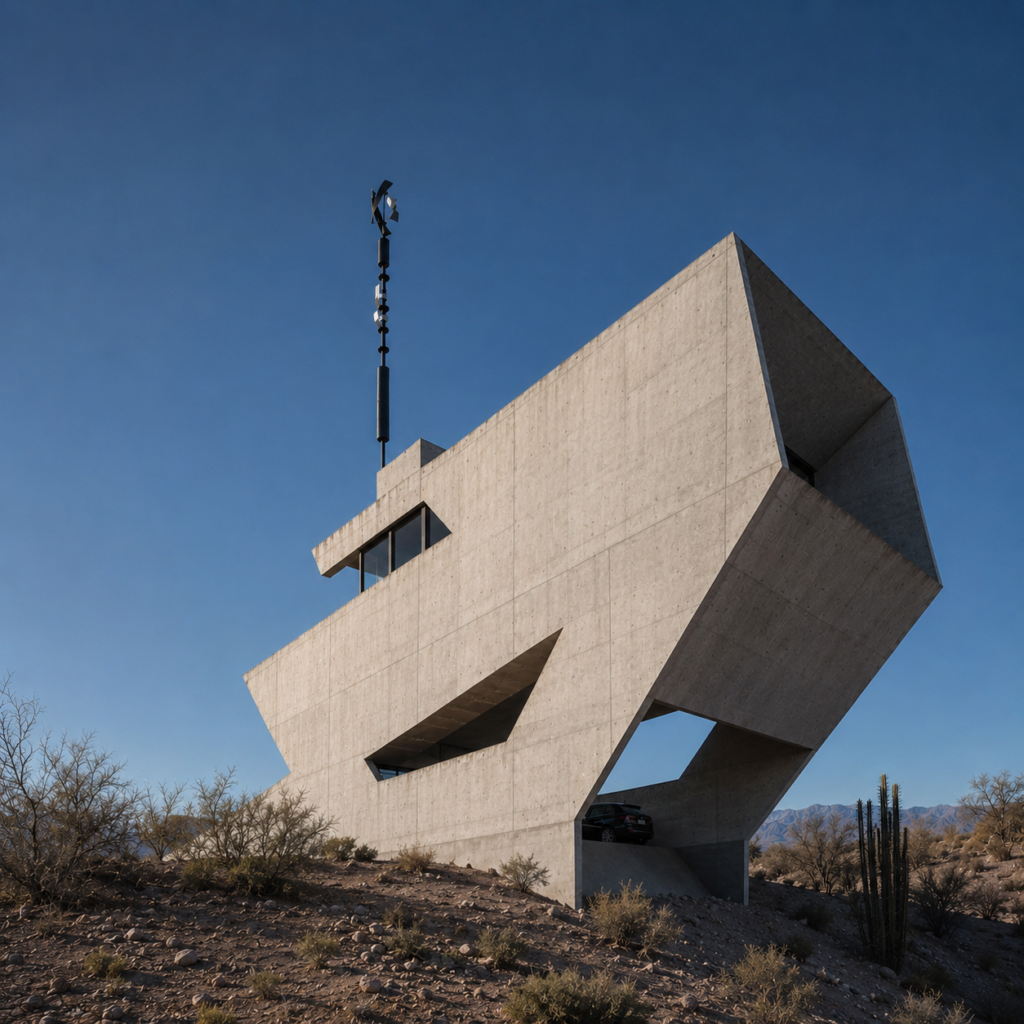
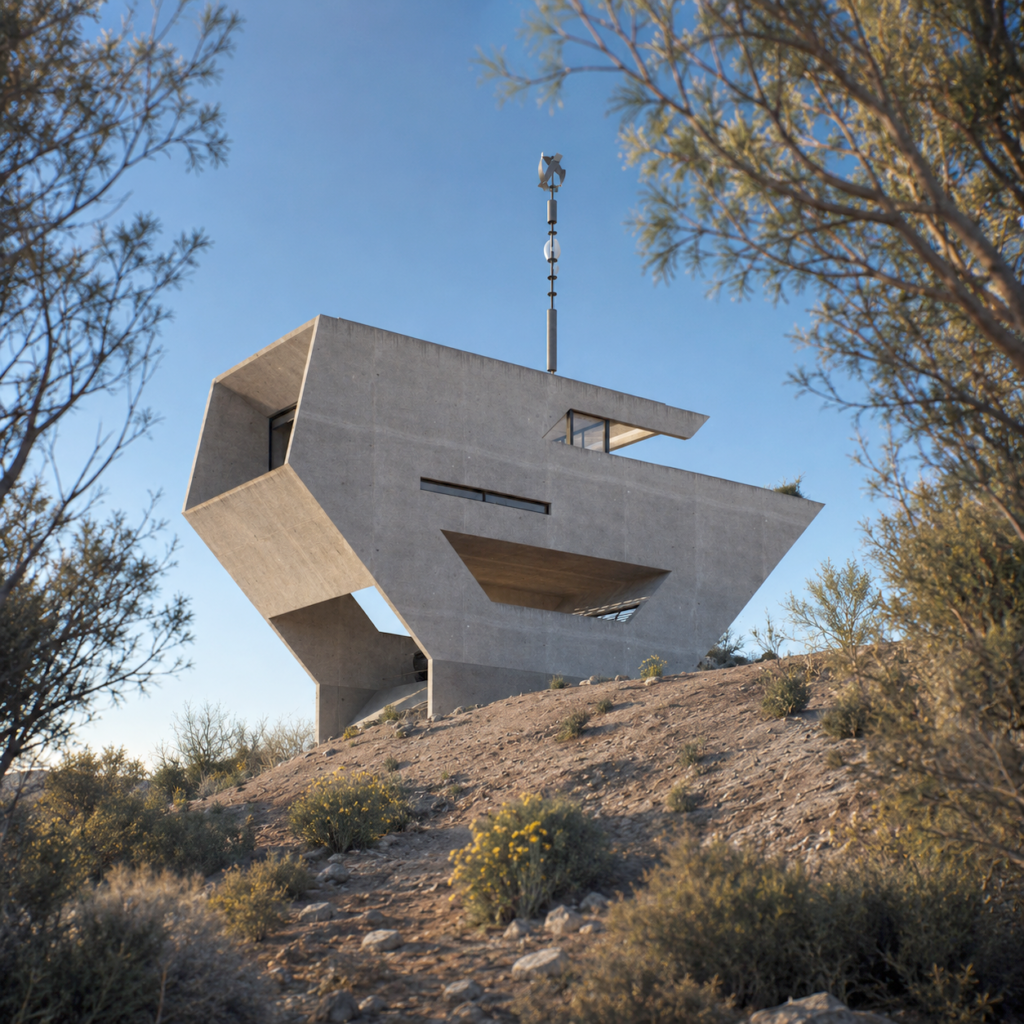
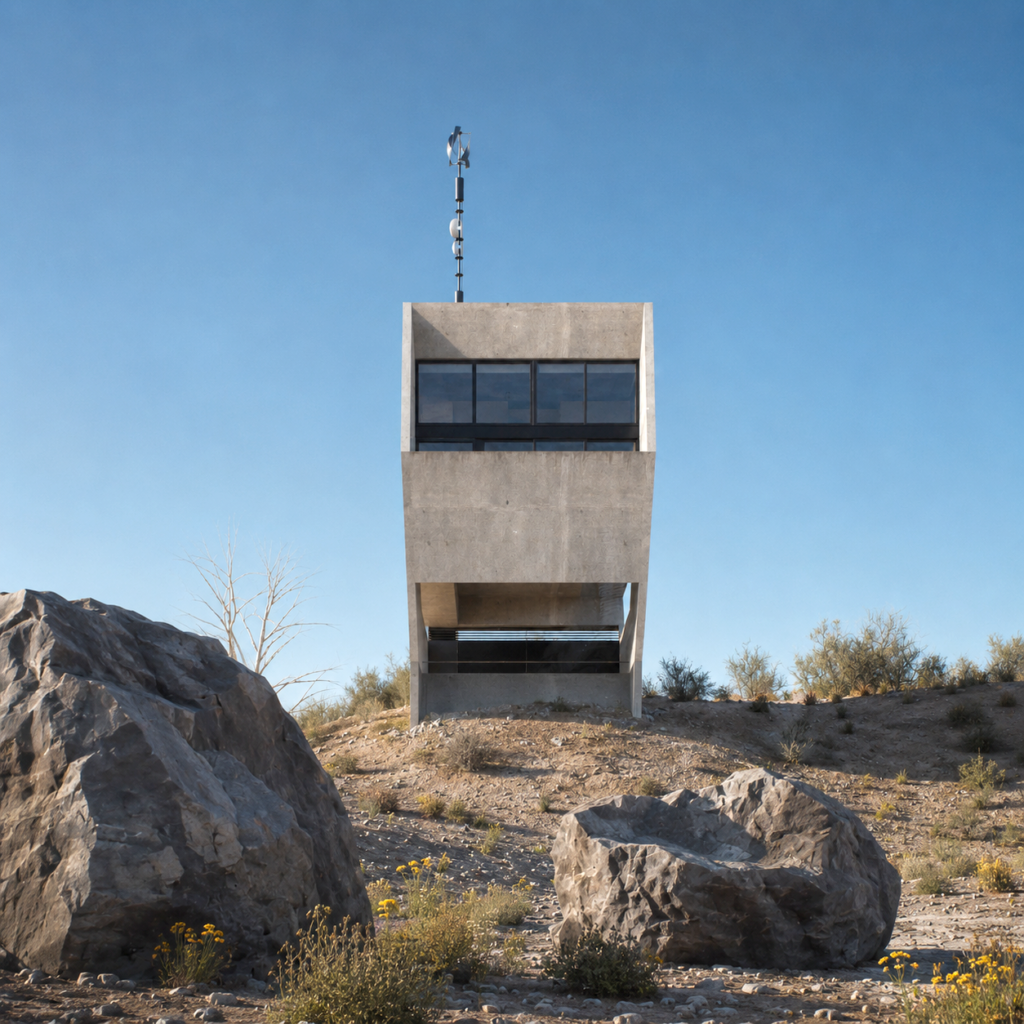
Implanted on a 14-hectare property, the house emerges as a sculptural piece of raw concrete suspended over the topography. A precise, monolithic and silent volume that dominates the arid landscape from an elevated position, generating from afar the same unease it generates from within.
Architecture here does not appear as a decorative object or as an arbitrary formal gesture. The house is a contemporary survival infrastructure. An autonomous refuge designed to operate independently of conventional networks of water, energy, and connectivity.
Architecture for an Unstable World
The house is part of a broader conceptual exploration linked to the principles of Autónoma: a line of architectural thinking that proposes rethinking housing not from the comfort of the system, but from its possible collapse.
In that context, the house is conceived as a resilient unit. Capable of operating independently. Capable of remaining closed, protected, and self-sufficient. Capable of withstanding adverse conditions, whether climatic, energetic, or social.
Here, isolation ceases to be a limitation and becomes an architectural value.
The house incorporates rainwater harvesting and storage systems through underground cisterns integrated into the natural topography of the site. The implantation takes advantage of the slopes to optimize water collection and distribution without resorting to permanent pumping.
Autonomy is not expressed solely through technology. It also appears in the materiality, the structural logic, the security, and the way in which the architecture relates to its natural surroundings.
A Habitable Fortress
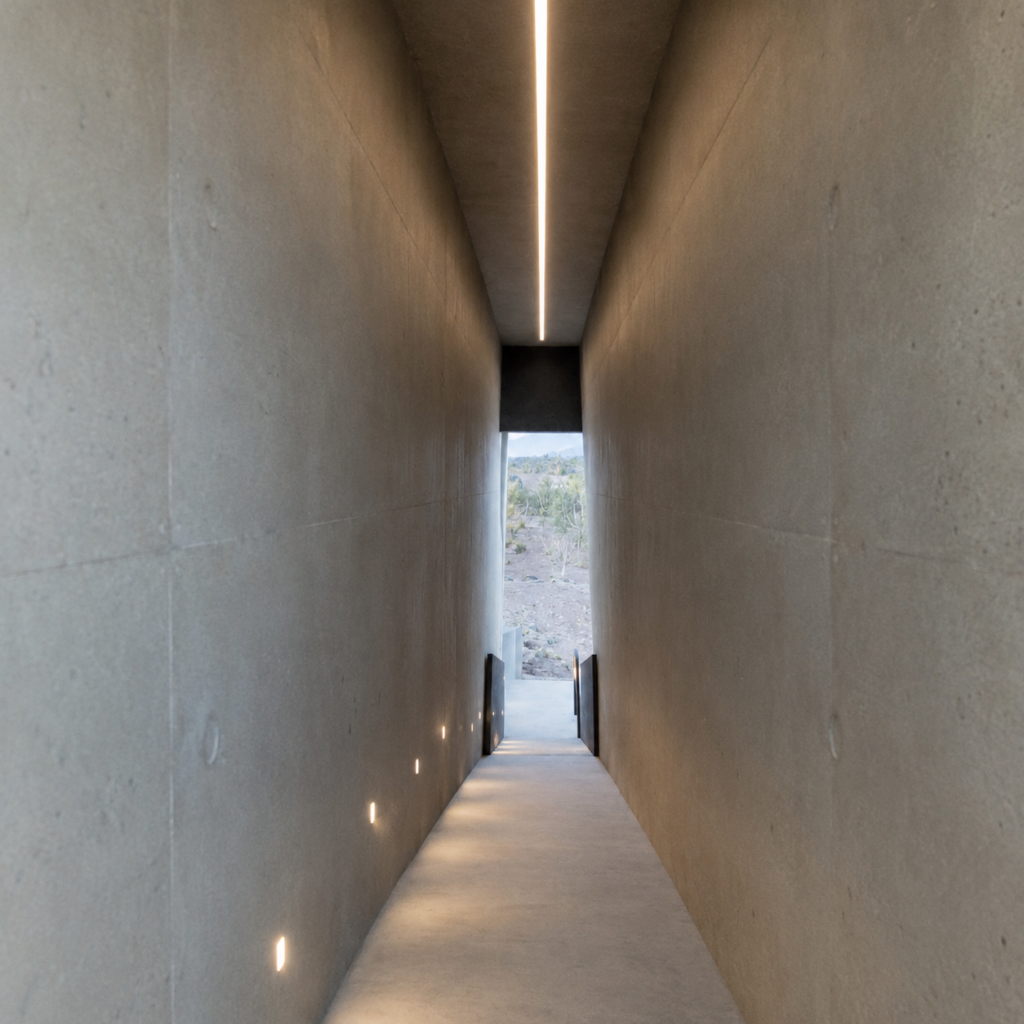
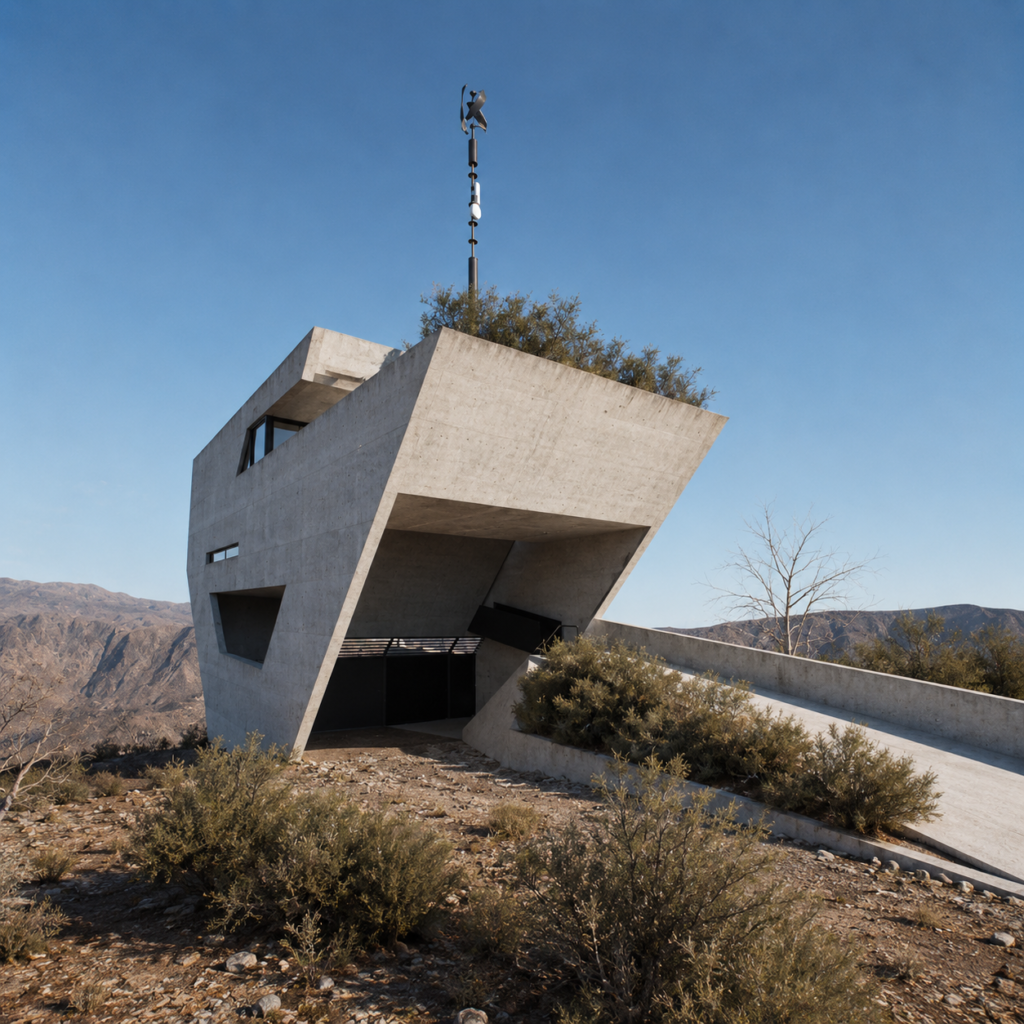
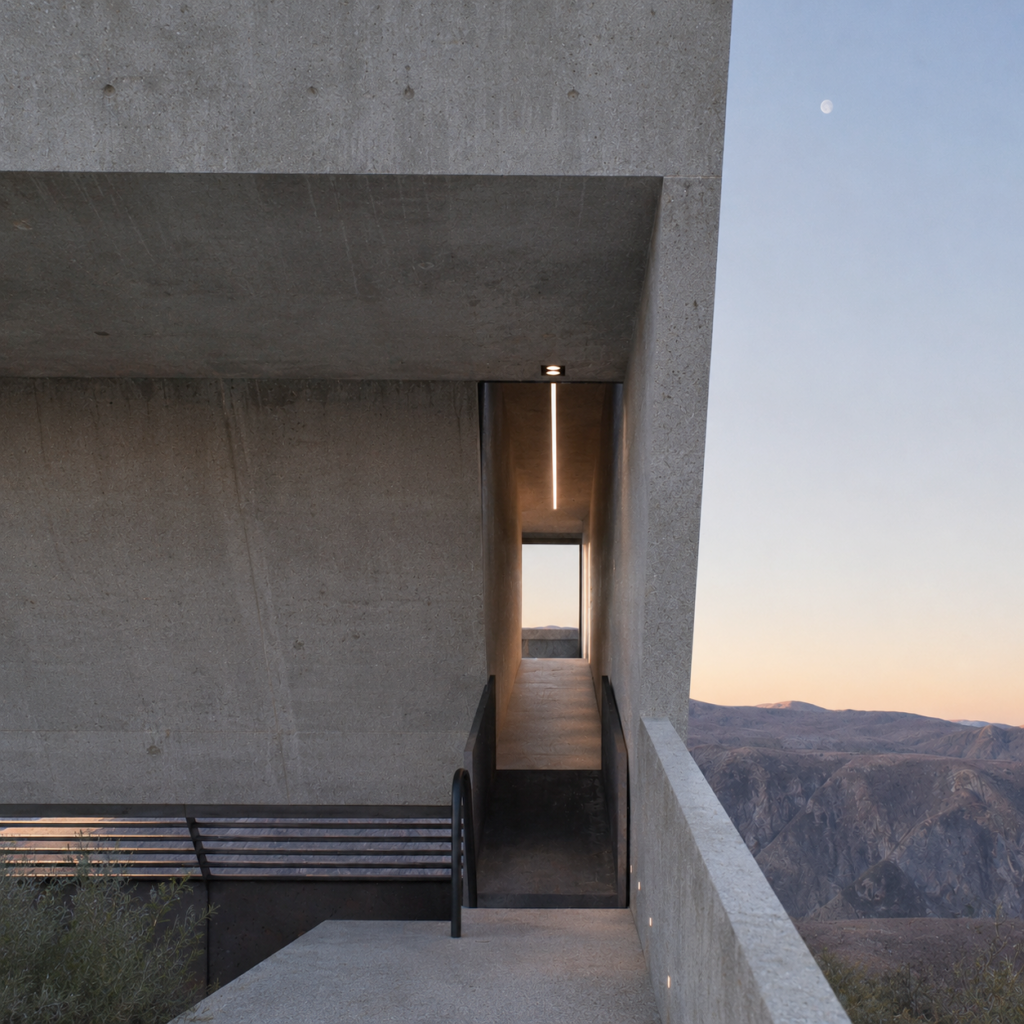
The house presents itself to the landscape as a closed, hermetic, and almost defensive piece. The lower facades are opaque and massive. The openings are minimal, precise, and deeply controlled.
Architecture here recovers an ancestral idea: the dwelling as protection.
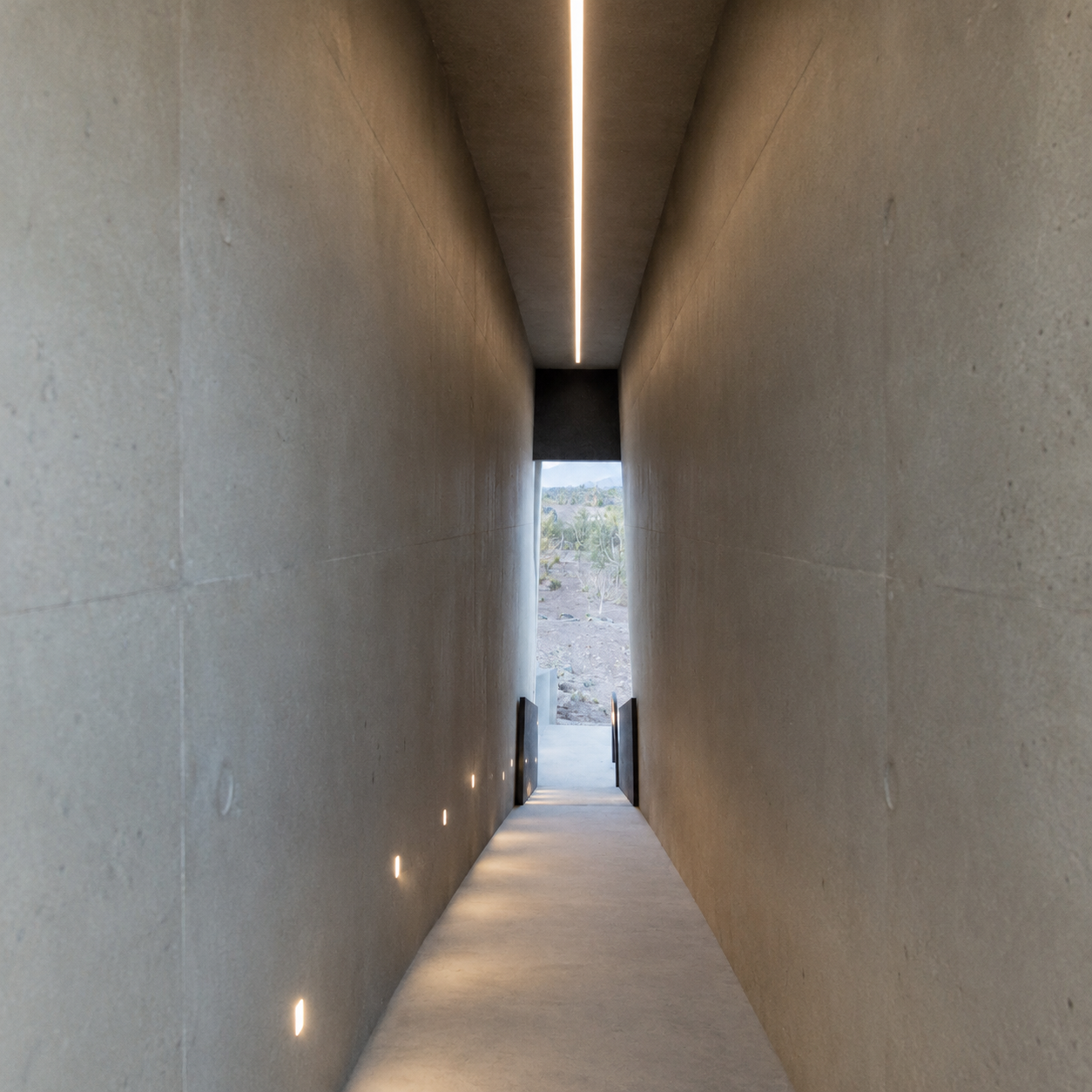
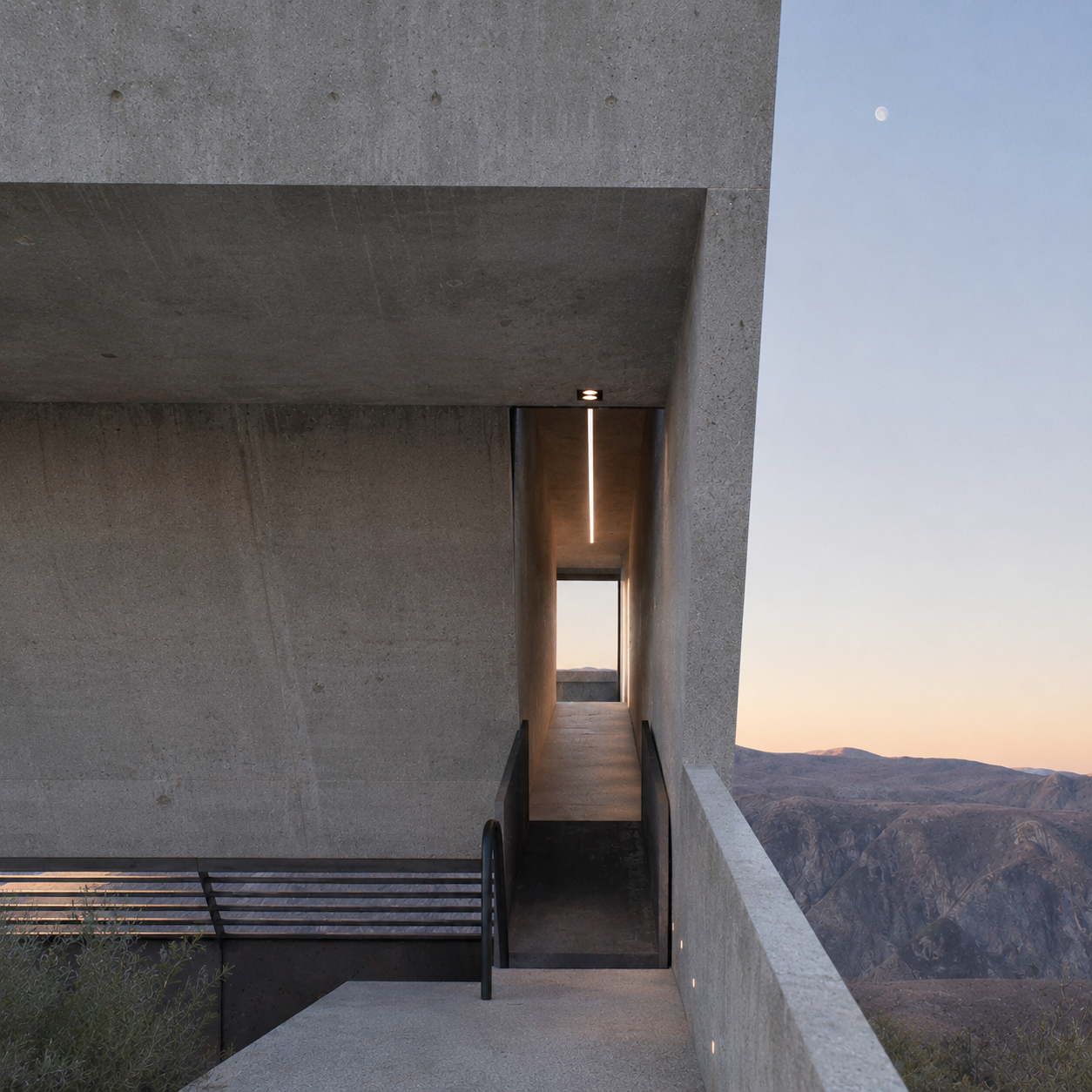
However, once that threshold is crossed, the interior transforms radically. The house opens toward the distant horizon, toward the sky, and toward the immensity of the Andean landscape. The defensive opacity of the exterior gives way to a broad, luminous, and contemplative interior spatiality.
The duality between enclosure and openness structures the entire work.
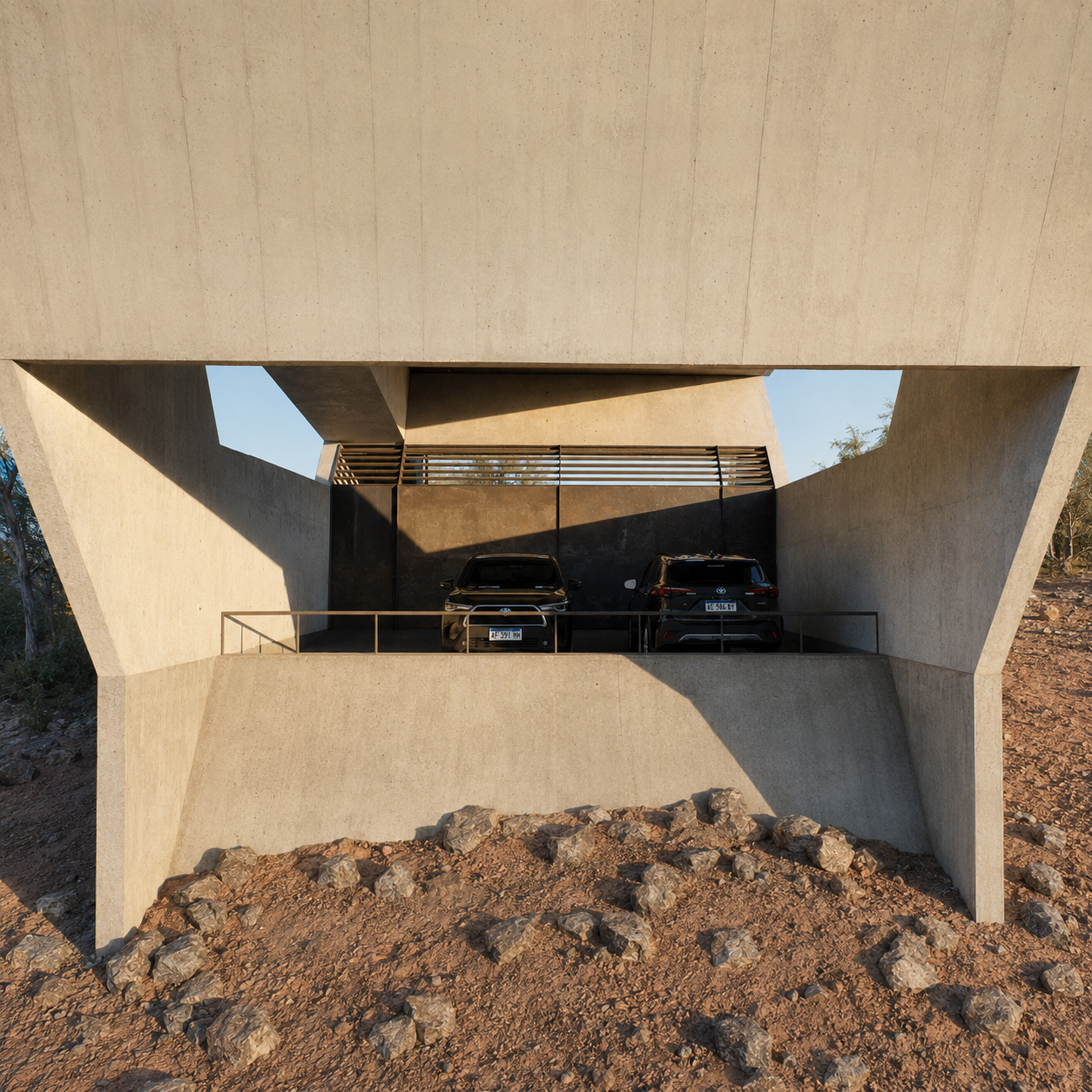
The house protects downward and expands upward. It closes in relation to the immediate proximity of the terrain and opens only when the height allows it to dominate the landscape from a secure position.
The Landscape as Infrastructure
The abrupt topography is not an obstacle but the main design resource. The house partially embeds itself in the terrain and uses the natural slopes to conceal itself, gain thermal inertia, and reduce its exposure to prevailing winds.
The desert functions simultaneously as protection, isolation, reserve, and void.
The architecture does not attempt to impose an artificial order on the landscape. It operates almost as a mineral extension of the mountain. The eroded concrete, the deep shadows, and the precise geometry build a presence that seems to have emerged from the terrain itself.
From a distance, the house appears more like a geological formation or a technical infrastructure than a conventional home.
Spatiality and Interior Life
The spatial organization develops across two clearly differentiated levels.
The lower floor contains the main public spaces: living room, kitchen, dining room, and expansion toward the main terrace. The upper floor concentrates the bedrooms, bathrooms, and areas of direct contemplation of the landscape.
Contemporary Brutalism
Formally, the house revisits certain principles of brutalism, though reinterpreted through a contemporary and territorial sensibility.
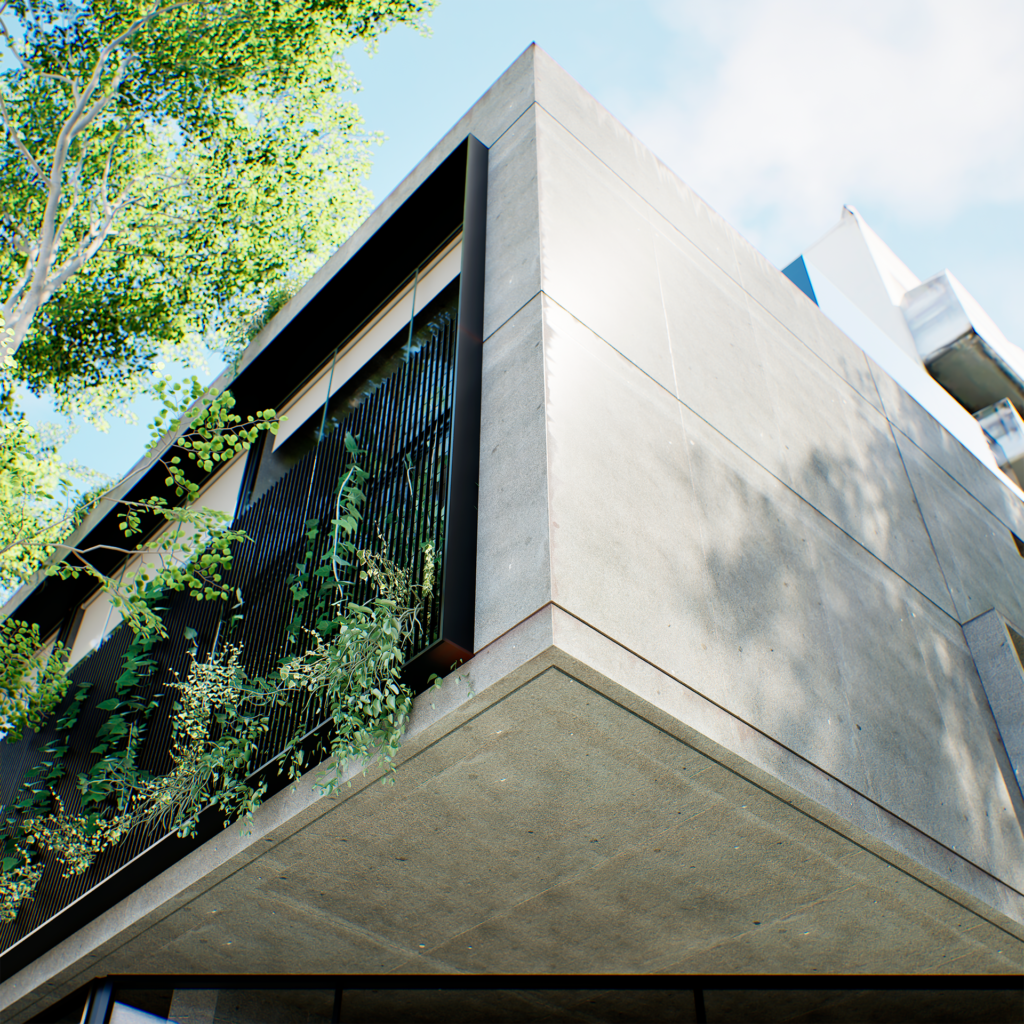
Exposed concrete does not appear as a superficial aesthetic decision, but as a direct consequence of the pursuit of permanence, robustness, and low maintenance. The precise geometry and the deep shadows generated by the cantilevers build a distinct plasticity.
Each formal operation responds simultaneously to a spatial, climatic, and symbolic logic.
The house does not seek to be light. It seeks to endure.
Inhabiting Isolation
This work raises an increasingly relevant question: how will we inhabit remote territories in a future marked by environmental, energetic, and social uncertainty?
The answer does not appear here through nostalgia or spectacular technology, but through an essential, resilient architecture deeply aware of its context.
An architecture capable of operating with less dependence.
Capable of protecting without emotional isolation.
Capable of coexisting with the landscape without domesticating it.
Capable of enduring when everything else fails.
Casa en aislamiento de San Juan, Argentina. Proyecto Leguía Yias ArquitectosCasa en aislamiento de San Juan, Argentina. Proyecto Leguía Yias ArquitectosCasa en aislamiento de San Juan, Argentina. Proyecto Leguía Yias ArquitectosAcceso principal a la Casa en aislamiento de San Juan, Argentina. Proyecto Leguía Yias ArquitectosFachada posterior de la Casa en aislamiento de San Juan, Argentina. Proyecto Leguía Yias ArquitectosAcceso a la casa en aislamiento de San Juan. El pasillo es literalmente un puente entre el interior y el extrior.Acceso a la casa en aislamiento en San Juan. Un puente levadizo funciona como puerta y nexo entre el interior y el exterior. Un pasillo rampante, genera la transición perfecta entre desconexión y seguridad formal.Nivel cero en la casa autónoma de San Juan. El acceso se traslada al nivel superior, quedando solo los vehiculos y las maquinarias en el nivel del terreno.Nivel cero en la casa autónoma de San Juan. El acceso se traslada al nivel superior, quedando solo los vehiculos y las maquinarias en el nivel del terreno.


 01 / 09