House in Isolation
Talacasto, San Juan, Argentina — 2025


Architecture
Monte Rico, Formosa, Argentina — 2009
In much of rural Argentina, architecture still depends on simple systems, limited resources and unpredictable growth processes. Far from understanding that condition as a shortcoming, this project proposes an architecture capable of adapting to time, climate and the real availability of resources, building a flexible, self-sufficient educational infrastructure deeply connected to the landscape.
In the rural regions of northern Argentina, buildings tend to share a common essential condition. The school, the health room, the shed, or the small public infrastructure emerge from the territory with simple materials, local constructive logics, and a direct relationship with the climate and availability of resources.
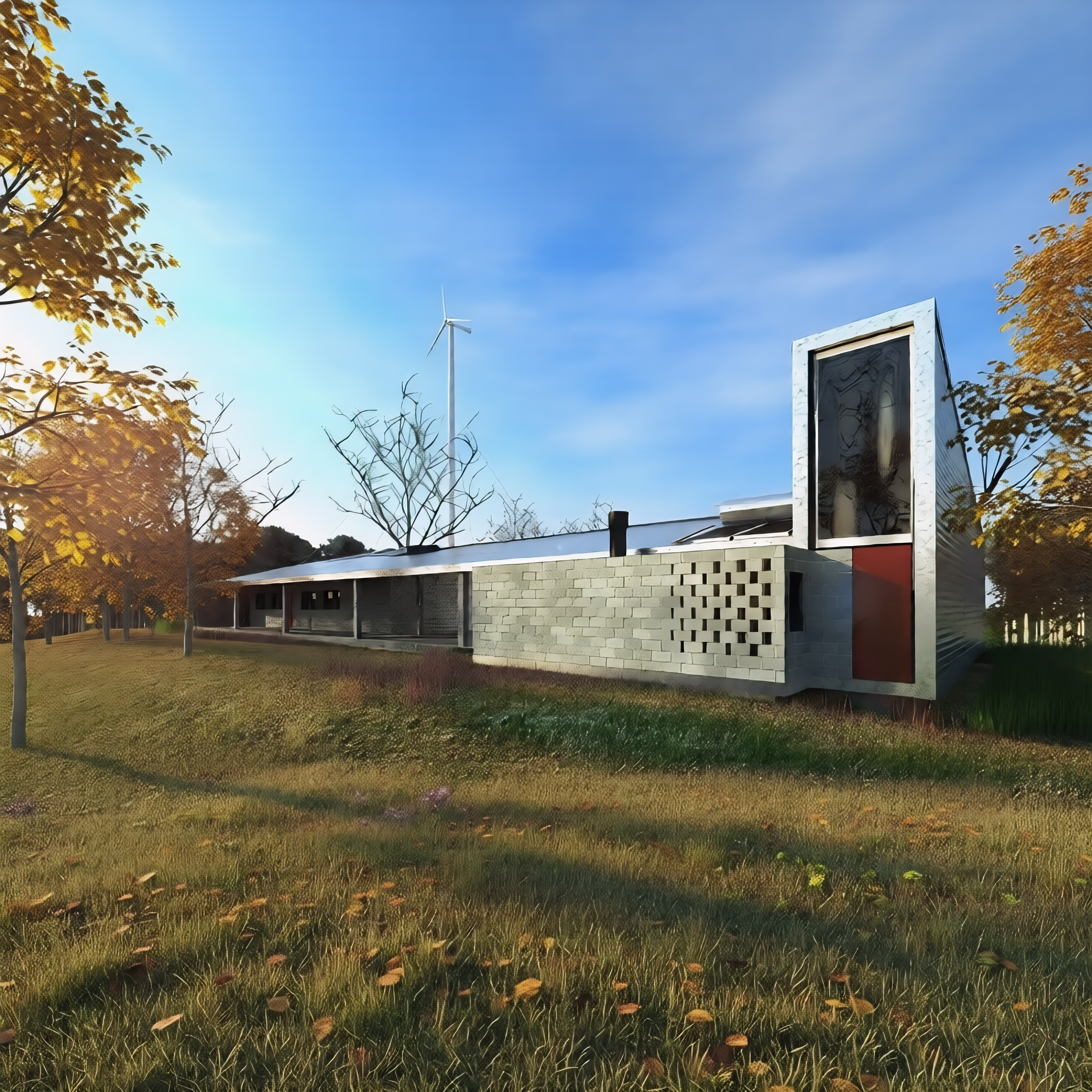
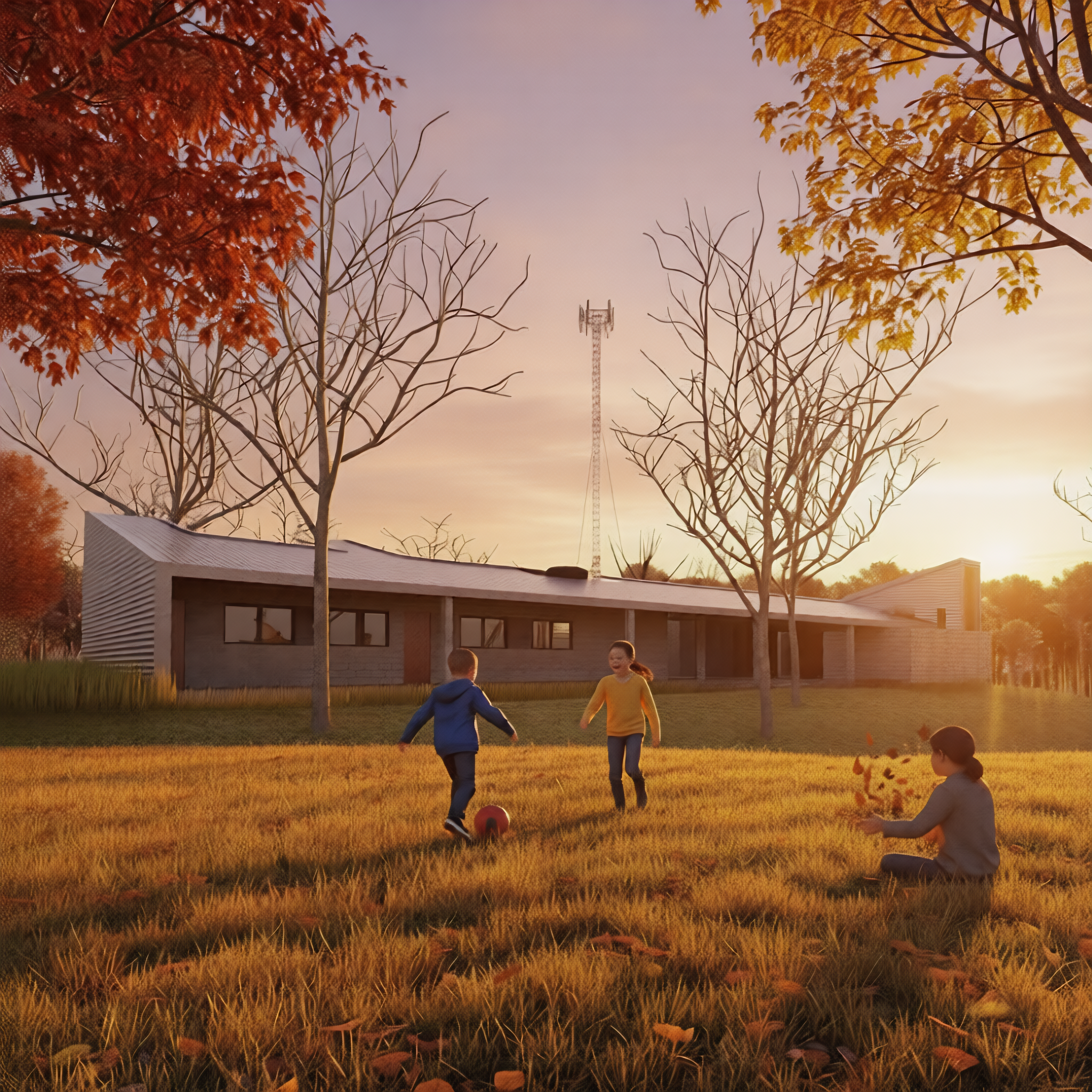
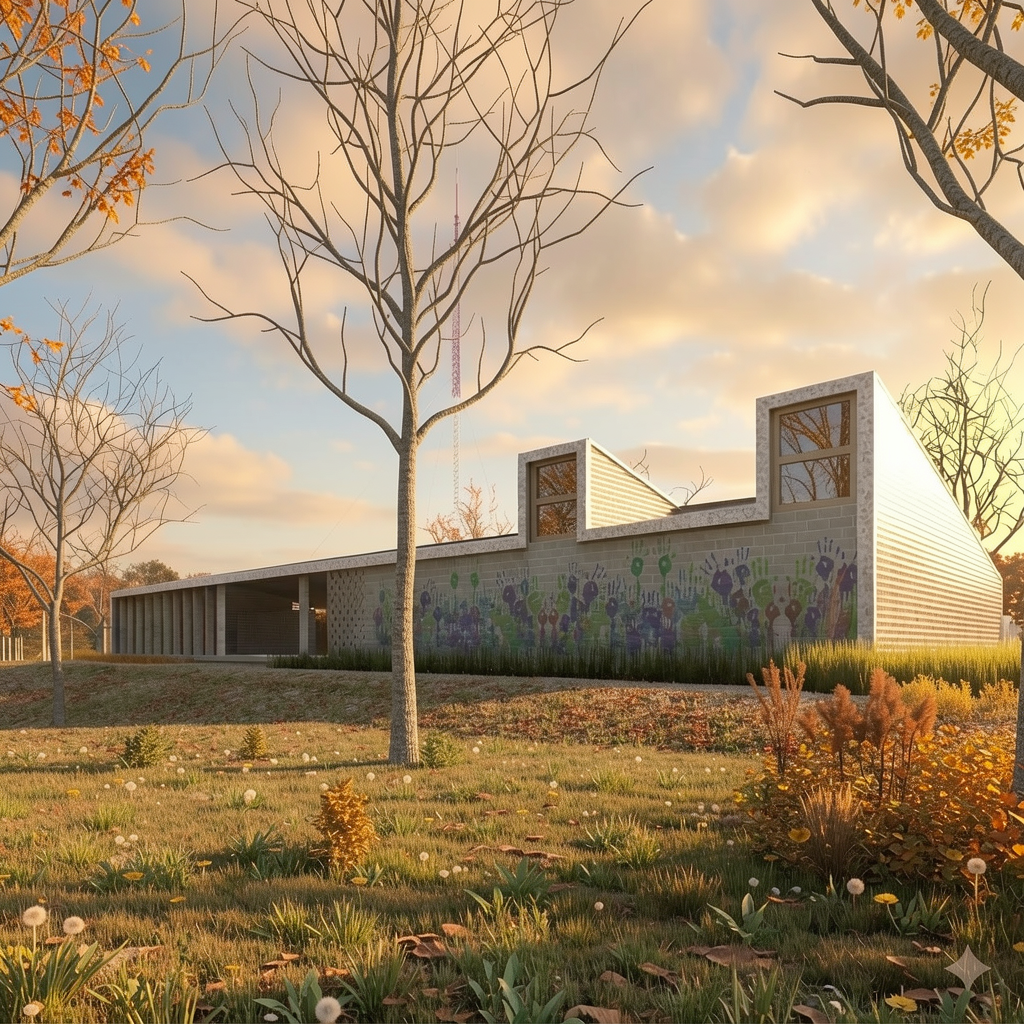
Far from seeking an iconic or autonomous image, the project embraces that tradition as its starting point. The sloped roof, the galleries, the intermediate spaces, and natural ventilation are design tools that belong to the territory before they belong to the project.
Architecture is understood here as a continuity of the productive and climatic landscape of northern Argentina.
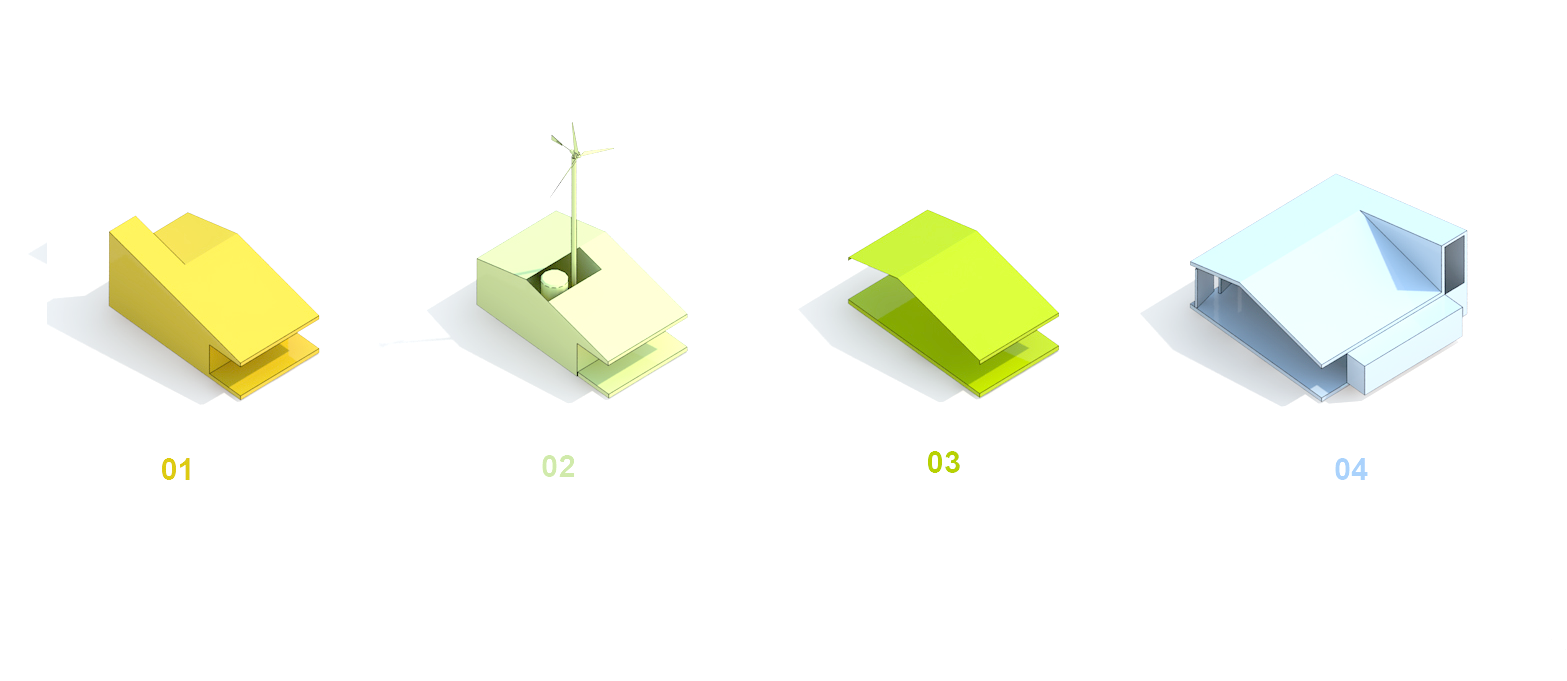
The project was not conceived as a single, closed building, but as a modular system capable of growing, transforming, and adapting to different geographic and budgetary contexts.
Each module can function relatively independently, allowing different configurations depending on the needs of each community. Classrooms, courtyards, sanitary cores, and multipurpose halls can be combined, expanded, or reconfigured without altering the identity of the ensemble.
This open condition allows the building to accompany real growth processes, preventing the initial lack of resources from limiting future expansions.
More than a finished form, the architecture proposes an evolutionary structure.
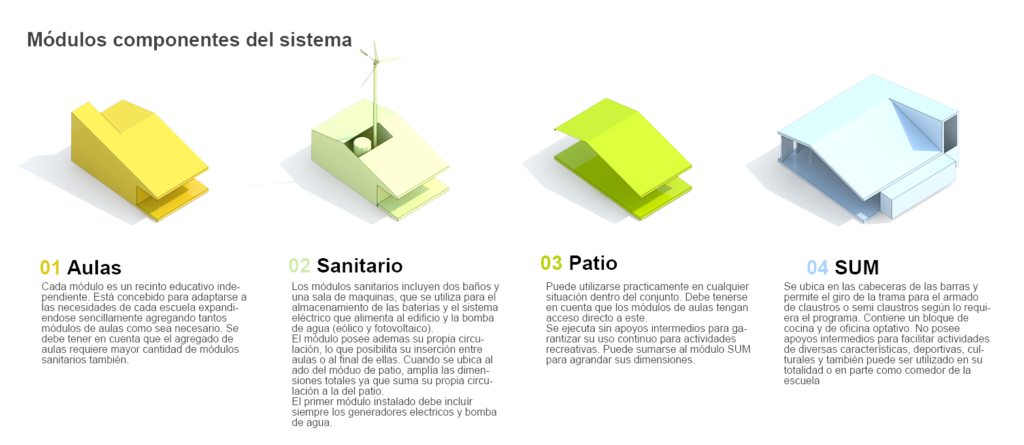
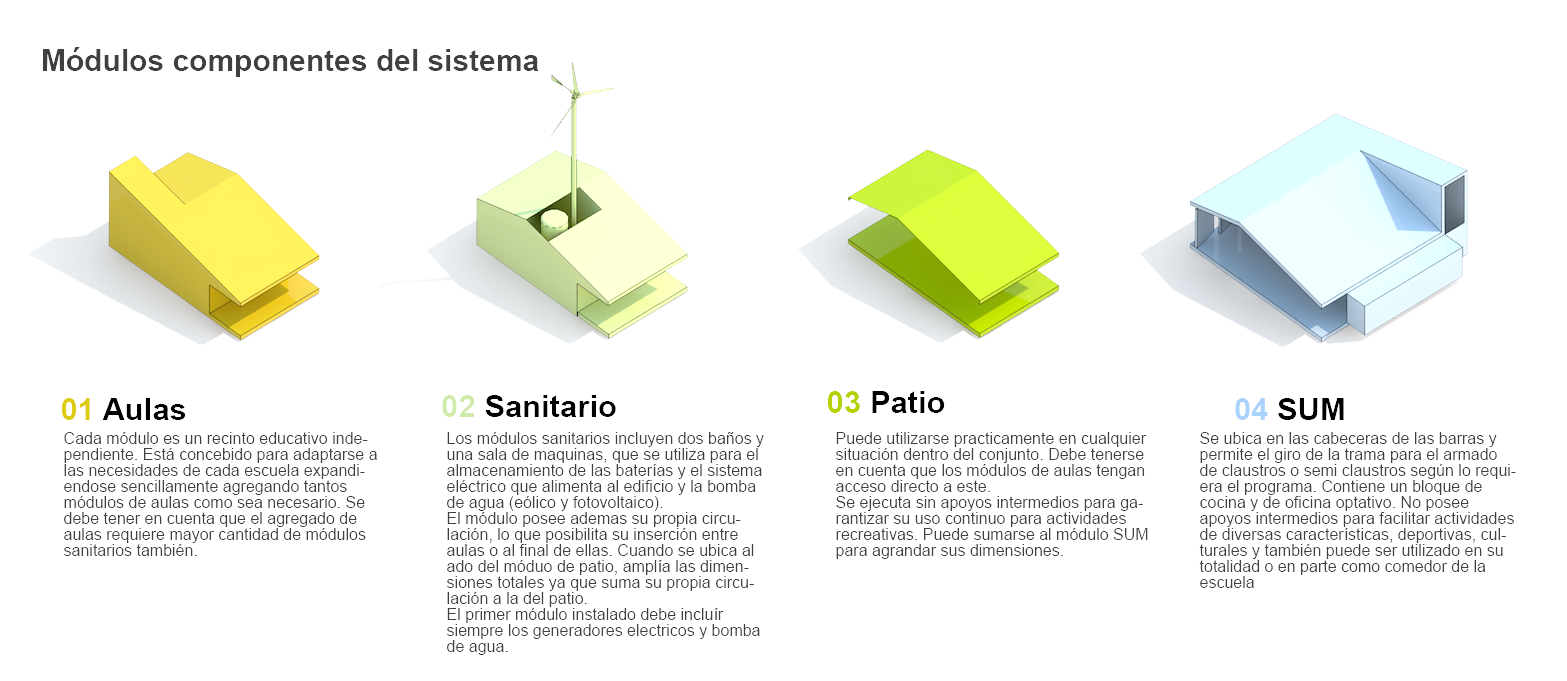
Each module is an independent educational enclosure. It is conceived to adapt to the needs of each school by simply expanding with as many classroom modules as necessary.
The sanitary modules include two bathrooms and a machinery room, used for storing batteries and the electrical system that powers the building and the water pump, in those situations where public services are not available.
The module also has its own circulation, which allows its insertion between classrooms or at the end of them. When placed next to the courtyard module, it expands the dimensions of the latter.
The first module installed must always include electrical generators and the water pump.
It can be used in practically any situation within the complex. It must be kept in mind that the classroom modules have direct access to it.
It is built without intermediate supports to guarantee its continuous use for recreational activities. It can be combined with the SUM module to increase its dimensions.
It is located at the ends of the bars and allows the turning of the grid for the assembly of cloisters or semi-cloisters as required by the program. It contains a kitchen block and a storage space, while generating independent circulation toward the bathrooms.
The environmental strategy of the project relies on passive conditioning systems capable of minimizing technological dependence.
Natural cross ventilation uses the thermal difference between galleries and skylights to generate constant airflows during the warm seasons, while the thermal inertia of the brick walls acts as a regulator during the cold seasons.
Natural lighting is also a central part of the proposal. The classrooms receive filtered light from the galleries and indirect light from upper skylights, avoiding glare and building a comfortable and balanced working atmosphere.
The complex also incorporates rainwater harvesting systems, wind and solar generation, vegetable gardens, and basic energy and water self-sufficiency schemes, understood not as complex technological solutions but as educational and community tools.
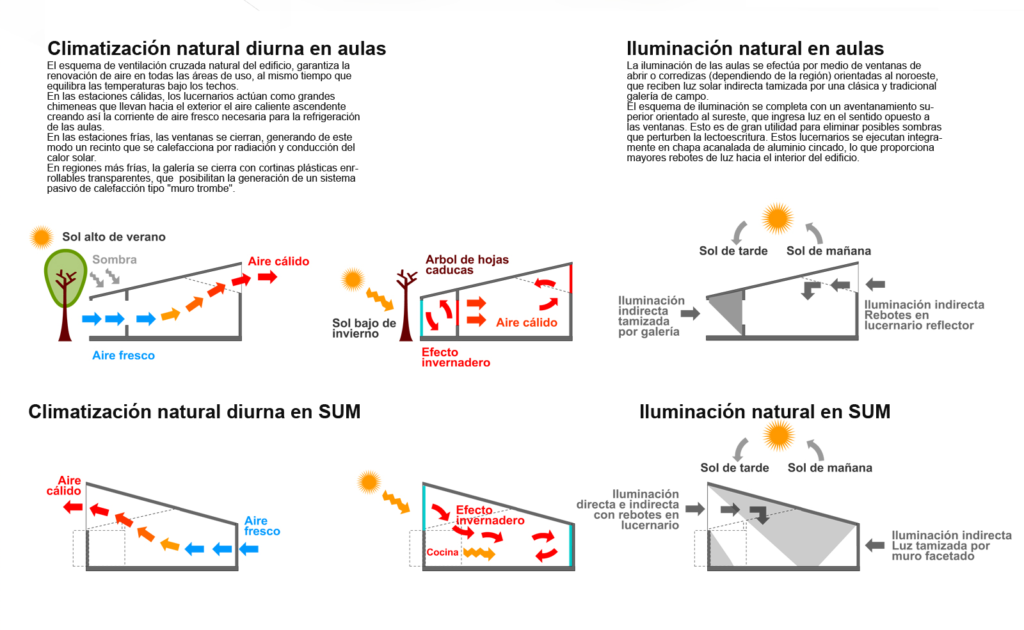
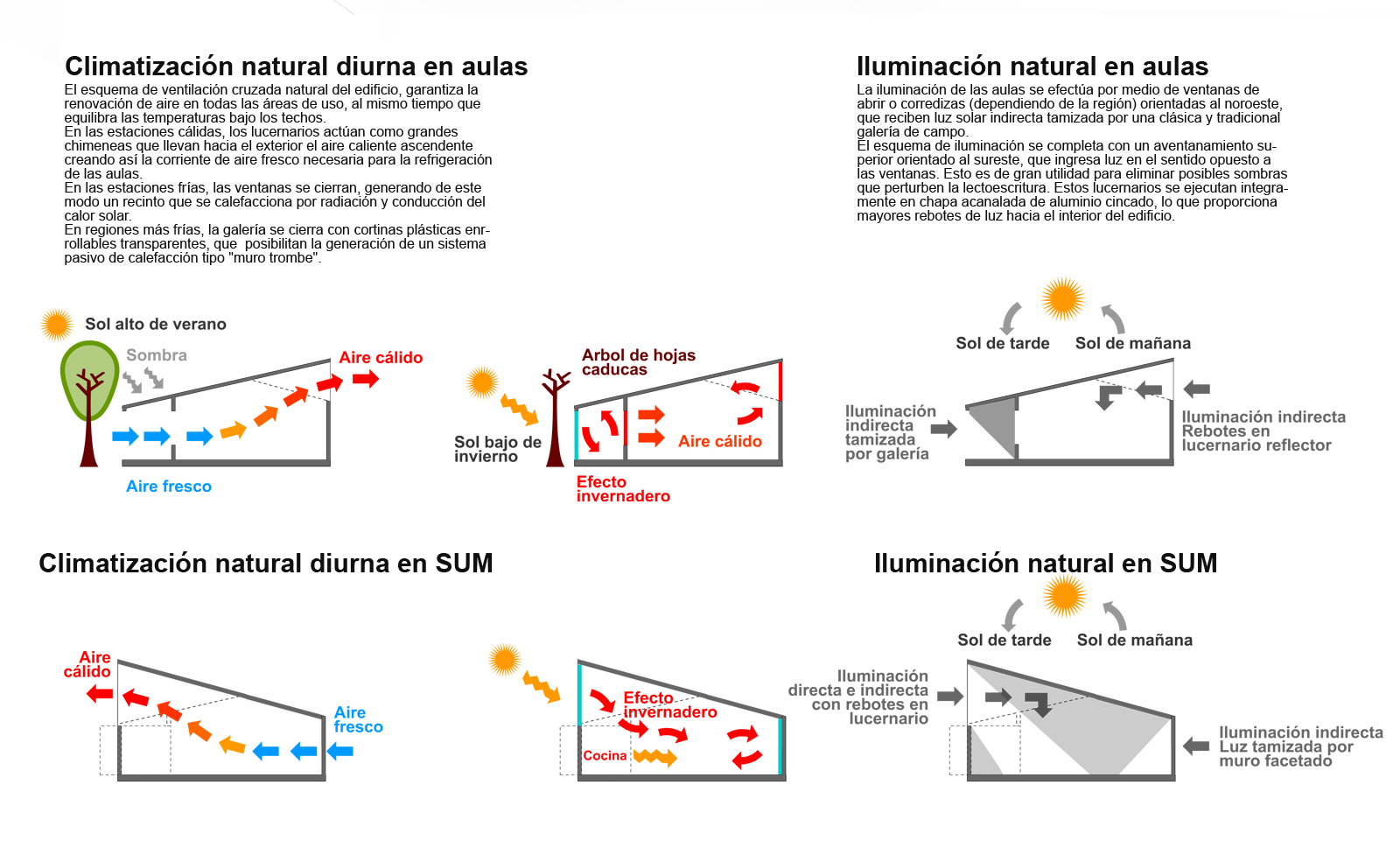
The building’s natural cross-ventilation scheme ensures air renewal in all areas of use, while balancing temperatures under the sloped roofs.
During warm seasons, the skylights act as large chimneys that carry the rising warm air outward, thus creating the fresh air current necessary for climate control in the areas of use.
During cold seasons, the windows close, generating an enclosure that is heated by radiation and conduction of solar heat.
In colder regions, the gallery is closed with transparent rollable plastic curtains, enabling the generation of a passive heating system of the “Trombe wall” type.
Classroom lighting is achieved through casement or sliding windows (depending on the region) oriented northwest, receiving indirect sunlight filtered by the covered gallery.
The lighting scheme is completed by upper windows oriented southeast, bringing in light in the opposite direction to the main windows. This is very useful for work on blackboards or screens, avoiding unwanted reflections.
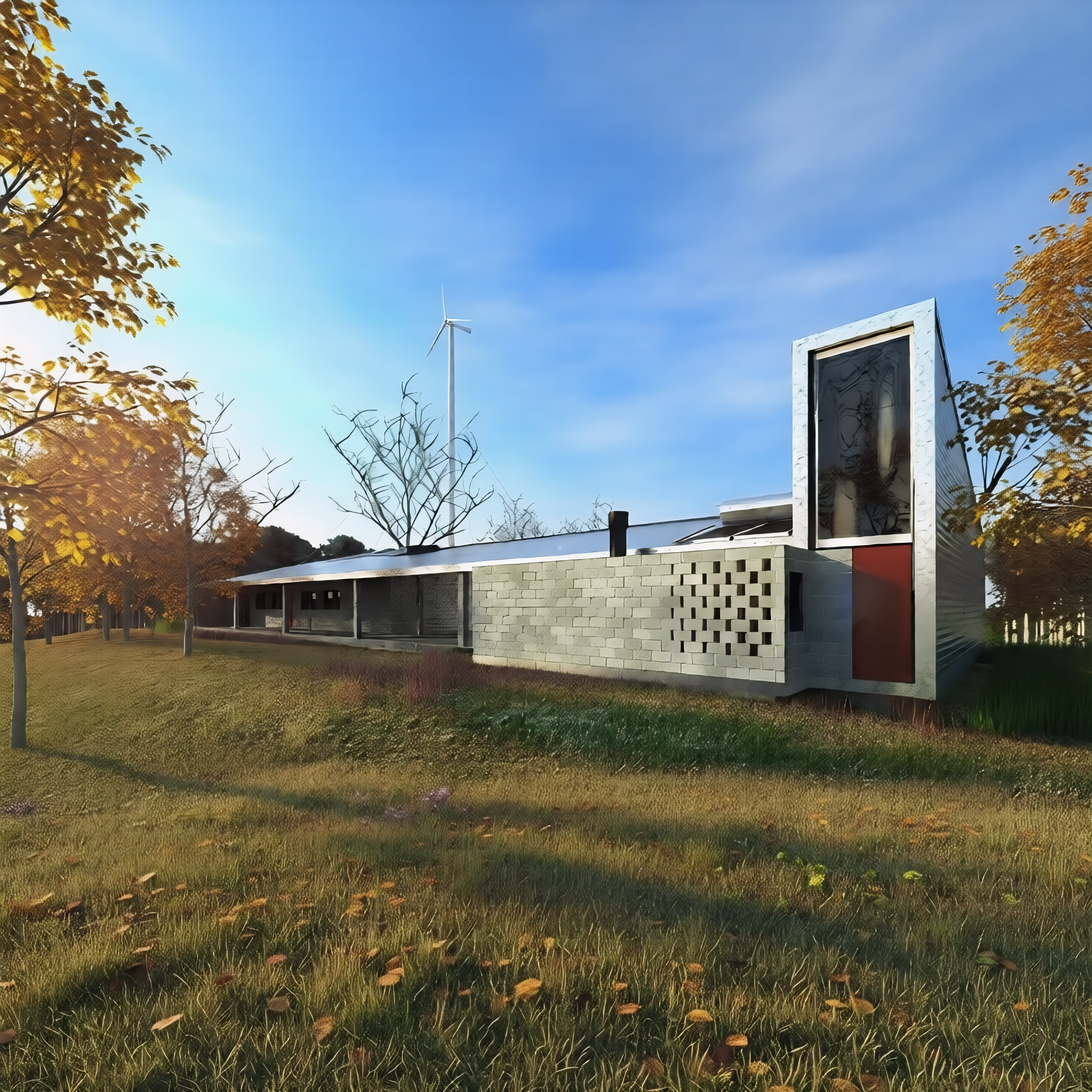
These skylights are built entirely from galvanized aluminum corrugated sheeting, which provides greater light reflection into the interior of the building.
The materiality of the project was conceived from a logic of regional adaptation. The metal structure, load-bearing masonry, and lightweight enclosures can be modified according to the local availability of materials and the constructive capacity of each region.
The architecture avoids depending on complex solutions or technologies that are difficult to maintain. Instead, it proposes a rational, simple, and durable construction, capable of being executed and maintained with the resources available in the territory itself.
Material flexibility does not seek to change the identity of the project, but to guarantee its real possibility of construction in diverse territories.
In territories shaped by economic uncertainty and social transformations, architecture rarely remains static.
The project assumes that condition from the outset. Its capacity for expansion, adaptation, and reconfiguration allows the school to evolve alongside the community that uses it.
More than imposing a definitive form, the architecture establishes a flexible framework where time, use, and landscape complete the project.
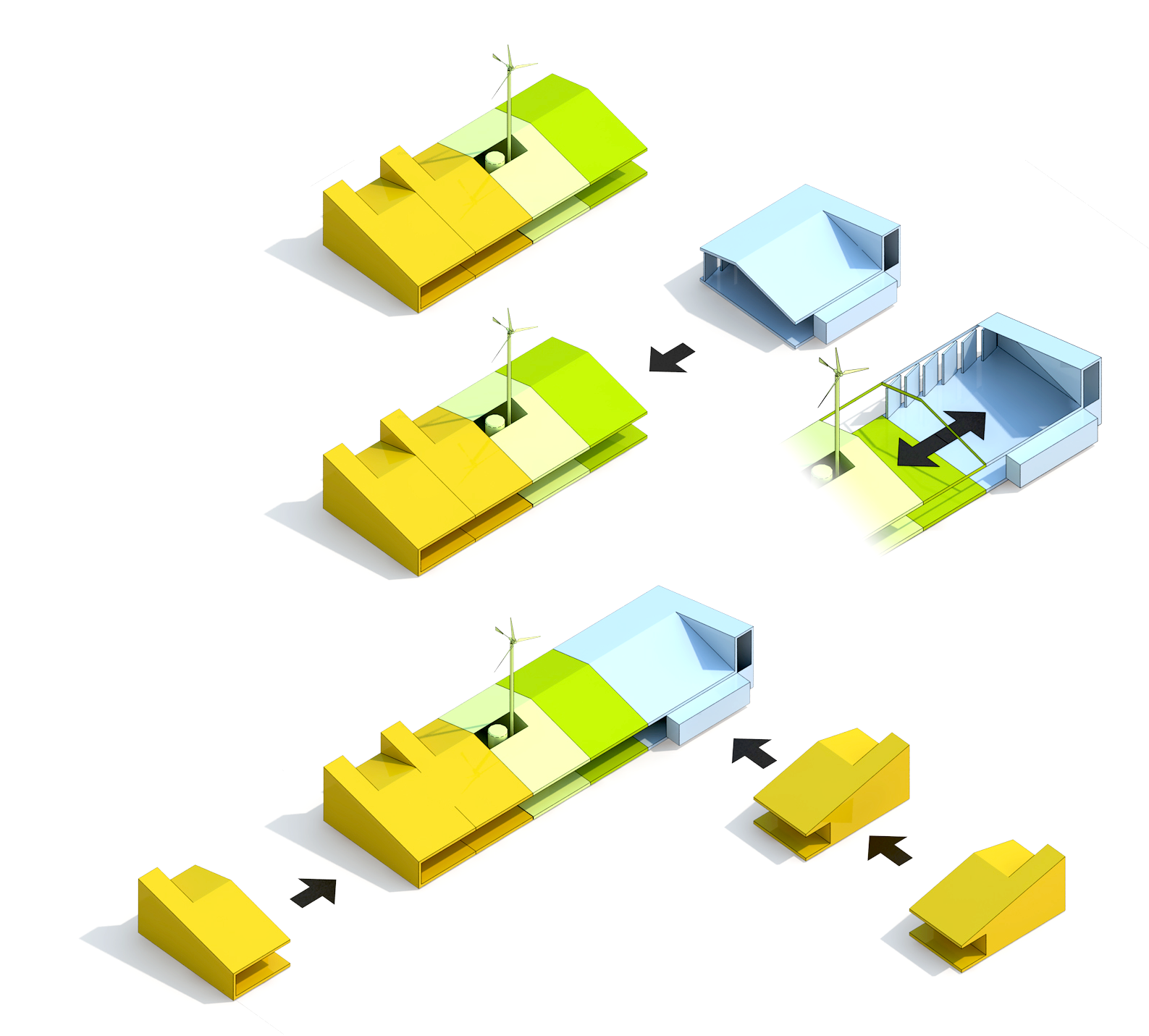
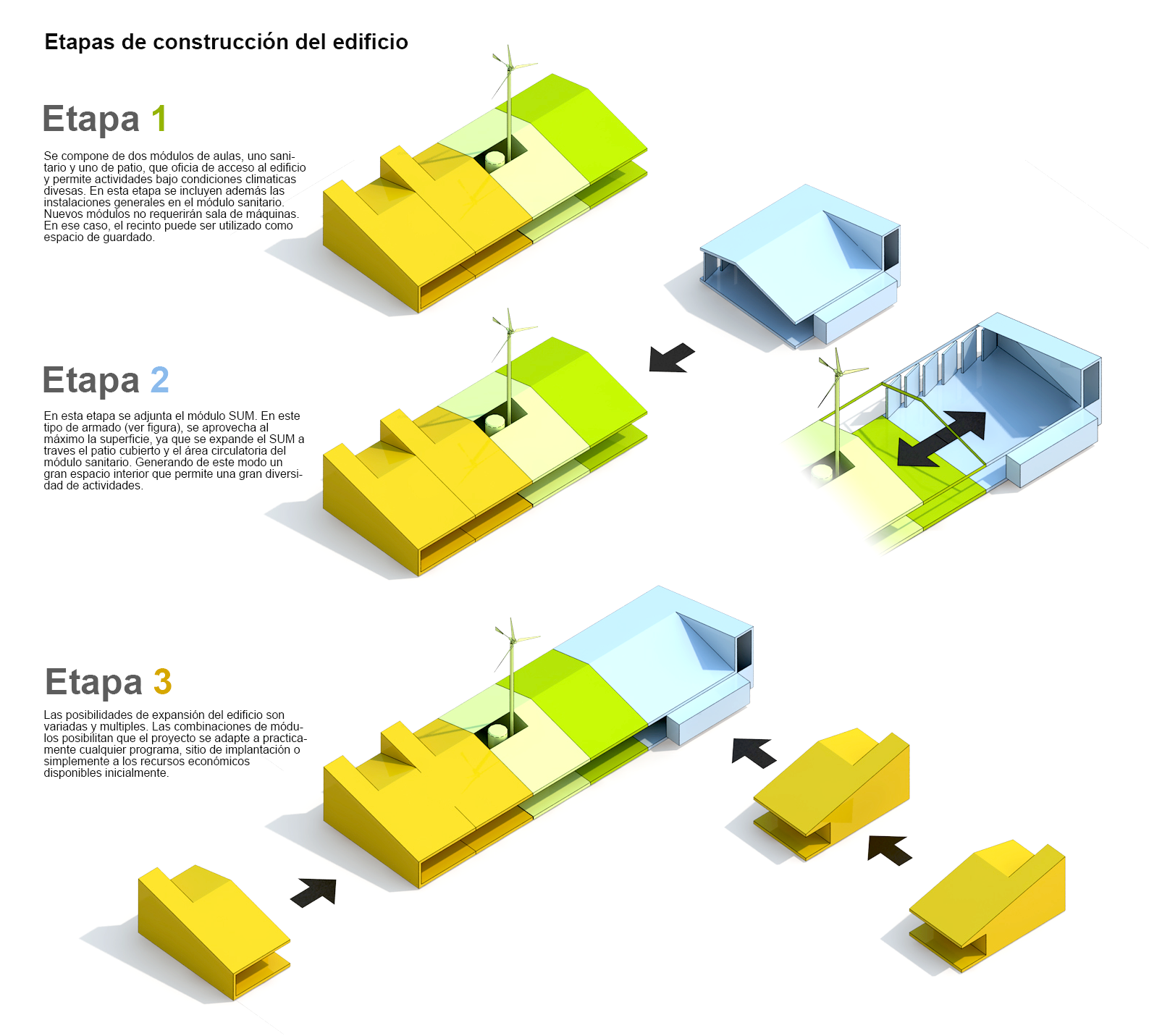
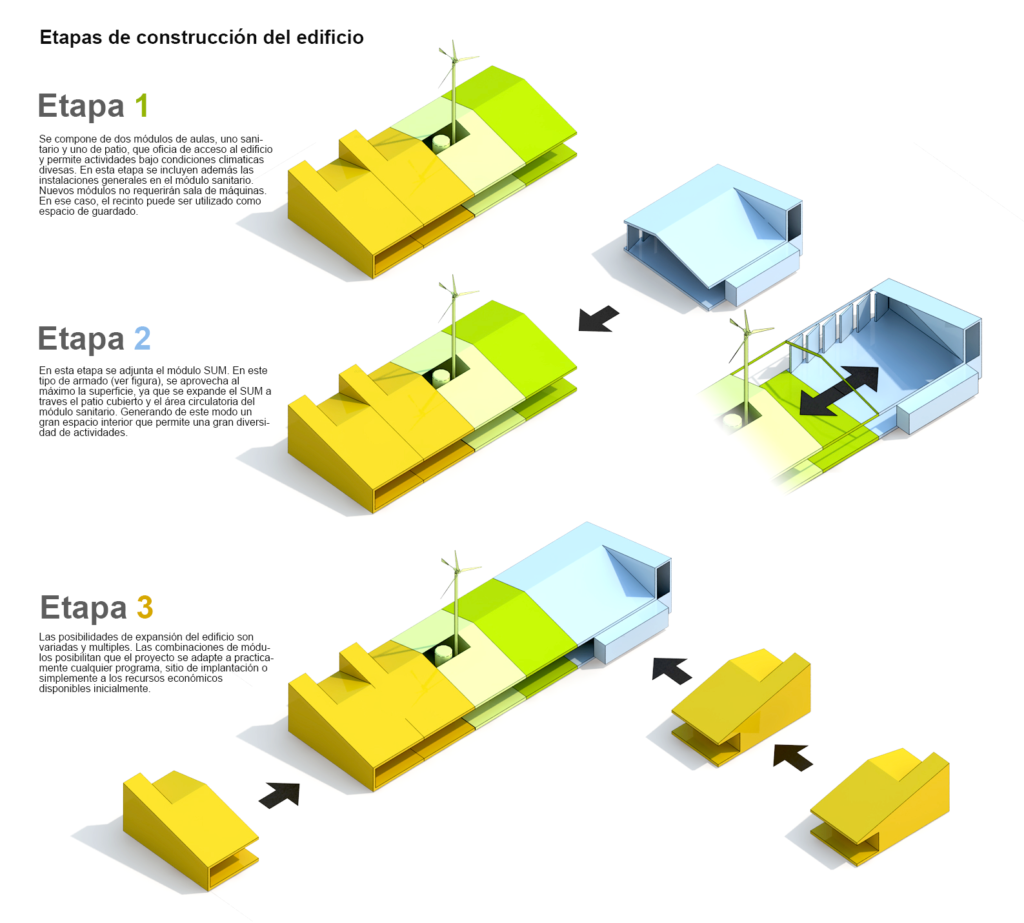
It consists of two classroom modules, one sanitary module, and one courtyard module, which serves as the building entrance and allows activities under diverse climatic conditions. In this phase, electrical generators and the water pump are installed within the sanitary module, providing energy and water to the institution without depending on public services.
New modules will not require a machinery room. In that case, the enclosure can be used as a storage space.
In this phase the SUM module is attached. In this type of arrangement (see figure), the surface area is maximized, as the SUM expands through the covered courtyard and the meeting area also enlarges.
The expansion possibilities of the building are varied. The combinations of modules allow the project to adapt to practically any program, implantation site, and geographic context.
“Rural architecture does not need to impose itself on the territory.
It needs to learn to grow with it.”
 01 / 09